
To raise free chlorine quickly, add a fast-acting source like liquid chlorine, and dose at dusk to reduce UV destruction. Engage your salt generator’s boost mode, raise the SWCG output percentage, and extend pump runtime for better generation and circulation. First, test free chlorine, pH, and CYA, then adjust pH to 7.4 to 7.6 so chlorine works effectively. Recheck the next morning to confirm 1 to 3 ppm. Below, you’ll find what’s driving your low readings.
Key Takeaways
- Add a fast-acting liquid chlorine source at dusk to quickly raise free chlorine while minimizing UV destruction.
- Engage the SWCG boost mode or increase output percentage for higher chlorine production per cycle.
- Extend pump runtime to support faster chlorine generation and better water circulation.
- Test and adjust pH to 7.4 to 7.6, since chlorine works more effectively within this range.
- Verify salt stays at 2700 to 3400 ppm and confirm CYA is present to prevent rapid UV loss.
How do you increase free chlorine in a salt water pool
To raise free chlorine in a salt water pool, add a fast-acting source like liquid chlorine, ideally at dusk when UV won’t destroy it. For persistent low readings, increase your salt cell’s chlorine output by raising the SWCG percentage, or engage boost mode if your generator offers it. Extend pump runtime to support generation and circulation. Recheck the next morning to confirm you’ve reached 1 to 3 ppm. Chlorine vs salt water pool cost can significantly influence your decision on which type of pool to install.
Test your water to measure free chlorine, pH, and cyanuric acid (CYA). Take your sample from elbow depth, away from skimmers and jets, using a reliable kit. Adjust pH to 7.4 to 7.6, since chlorine works more effectively when pH sits in range. Turn on your pump and filter so water’s moving before you dose. How to take care of a salt water pool involves regular maintenance to ensure optimal performance. Regularly check and clean the salt cell, as buildup can affect chlorine generation.
Why is free chlorine low in the first place
Free chlorine drops because multiple factors drain it faster than it can be replaced. Sunlight is the biggest culprit: UV rays break down chlorine fast, especially when your CYA is too low to stabilize it. Without adequate CYA, midday sun can strip out most of your free chlorine within hours. Heavy bather loads, sweat, oils, and organic debris also consume chlorine as it neutralizes contaminants. A high contaminant load can outpace your generator entirely, forcing you to shock the water to catch up. Underproduction matters too. If your SWCG percentage is set low or your pump runtime is short, you simply aren’t generating enough. Hot weather, rainfall, and poor circulation accelerate these losses, keeping your readings stubbornly below target.
How do you adjust the generator to raise chlorine
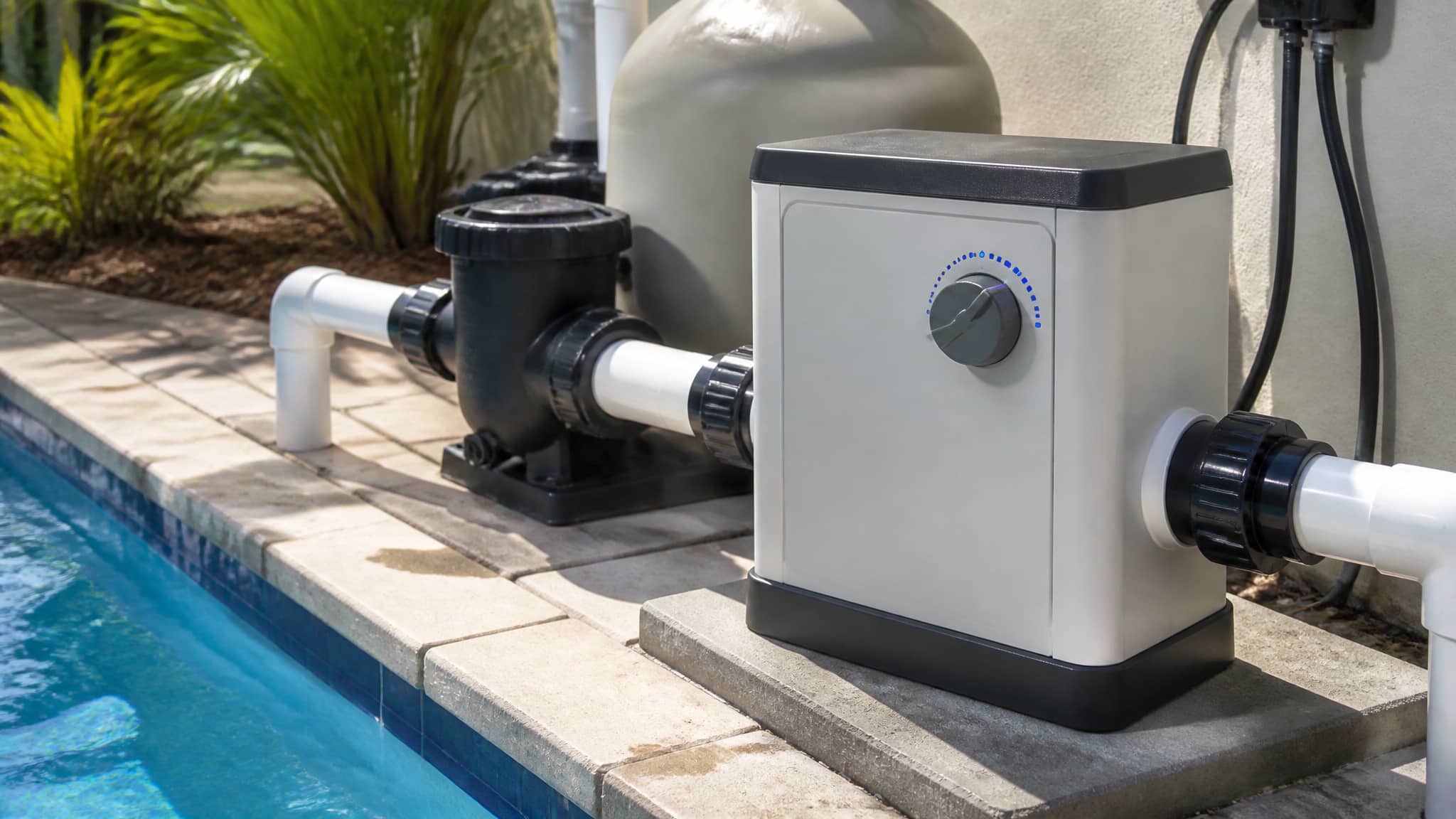
Raise the SWCG output percentage to make the cell generate more chlorine per cycle. If free chlorine still lags below the 1 to 3 ppm target, extend how long the pump runs so the cell operates longer and circulates evenly. You’ve got two levers to pull: the SWCG percentage setting and pump runtime.
- Increase the SWCG percentage incrementally, then retest before pushing higher.
- Extend pump runtime to give the cell more generation hours each day.
- Verify salt levels sit within 2700 to 3400 ppm, since low salt cripples output.
- Inspect the cell for scale buildup that blocks chlorine production.
Recheck free chlorine after several hours, and adjust again only after confirming your readings stabilize.
How do the fastest boosting methods compare
Liquid chlorine acts faster than granular shock, dispersing easily and raising free chlorine about 3 ppm per quart per 10,000 gallons, making it the common recommendation for rapid boosts. Adjusting the generator works for gradual correction, but when free chlorine drops critically low, you need a faster source. Liquid chlorine and granular shock both raise levels quickly, but their dosing rates differ. Compare the two common options:
| Fast Source | Approximate Effect |
|---|---|
| Liquid chlorine (12.5%) | ~1 quart per 10,000 gallons raises free chlorine ~3 ppm |
| Granular chlorine | ~1 pound per 10,000 gallons raises free chlorine ~1 ppm |
Granular cal-hypo suits shock treatments when contaminant load is high. Whichever you choose, dose at dusk, run the pump to circulate fully, and wait 8 to 12 hours before swimming. Retest afterward to confirm you’ve reached target range.
How do stabilizer and salt levels affect free chlorine
Stabilizer and salt levels affect free chlorine in two distinct ways. Cyanuric acid (CYA) shields free chlorine from UV degradation, but it doesn’t create chlorine, your salt system does. If salt runs below range, the generator underproduces, and free chlorine drops regardless of how much stabilizer you’ve added. Test both before troubleshooting a low reading.
- Keep salt within 2700 to 3400 ppm so the SWCG can generate chlorine efficiently.
- Confirm CYA is present to protect chlorine from rapid daytime UV loss.
- Measure CYA when free chlorine won’t hold, since deficiency accelerates depletion.
- Recheck salt after rain, dilution, or heavy backwashing, which lower concentration.
Balancing both first prevents repeated, ineffective chlorine dosing.
How do you keep it stable long term
Long-term stability comes from tuning the salt system and reducing chlorine demand so levels hold between tests. Start by raising the SWCG percentage setting if the generator’s underproducing. If output still lags, extend pump runtime so the cell generates and circulates more chlorine each day. Reduce demand by skimming, brushing, and vacuuming regularly, since debris and organic load consume free chlorine fast. Keep salt in the recommended range, roughly 2700 to 3400 ppm, so the cell operates efficiently. Maintain CYA at a level that shields chlorine from UV without suppressing its sanitizing power. Monitor weekly, and more often after heavy use, hot weather, or heavy bather loads, since these conditions accelerate chlorine loss. Retest and adjust before readings drift out of range.
Conclusion: Raising Free Chlorine in a Salt Water Pool
When free chlorine drops in a salt pool, boosting it quickly keeps the water safe and clear. You can raise the generator’s output or run a longer cycle, and for a fast fix, add chlorine directly by shocking the pool. Checking salt level, stabilizer, and pH first helps the chlorine work. Staying ahead of low chlorine, especially after heavy use or rain, prevents algae and keeps a salt pool sparkling. The way a salt water pool works involves a system that generates chlorine from salt dissolved in the water. This process not only disinfects but also helps maintain a balanced ecosystem for swimming.
Keep Your Saltwater Pool Perfectly Balanced
Maintaining proper free chlorine levels in a saltwater pool takes expert knowledge and consistent care. At Pool Doctor of the Palm Beaches in Delray Beach, FL, our experienced team provides trusted Concierge Pool Maintenance with expert saltwater chemistry management and reliable service. Call +1 (561) 586-2815 today and enjoy your pool worry-free.
Frequently Asked Questions
Can You Swim Immediately After Adding Chlorine to a Saltwater Pool?
If you shock the pool to raise chlorine quickly, wait until the level drops back into the normal range, usually 1 to 3 parts per million, before swimming, which can take several hours. Test first. If you simply increase the generator output, the rise is gradual and swimming is usually fine once it is in range.
Does Adding Chlorine Damage the Salt Cell or Generator?
Adding chlorine to shock the pool does not harm the salt cell, since the cell produces chlorine anyway. What shortens a cell’s life is scale buildup and running it outside recommended conditions. Occasional shocking is normal and safe, so boosting chlorine directly when needed will not damage the generator.
Can Too Much Free Chlorine Harm Swimmers or Pool Surfaces?
Very high chlorine can irritate skin and eyes and, over time, wear on some surfaces and fittings, so it is best not to swim until the level comes back down. It usually drops on its own within hours to a day. Testing before swimming ensures the level is safe and comfortable.
Does Rain or Heavy Weather Affect Free Chlorine Levels?
Yes. Heavy rain dilutes the water and can wash in contaminants, which lowers free chlorine and can trigger algae. Storms and heavy bather loads have a similar effect. Testing and boosting chlorine after big weather or heavy use keeps a salt pool balanced and clear.
Is Liquid Chlorine Safe to Store Near Saltwater Pool Equipment?
Store liquid chlorine in a cool, dry, ventilated spot away from other chemicals and out of direct sun, and not right on top of metal equipment, since fumes can corrode it over time. Keep it sealed and clearly labeled. Safe storage protects both your equipment and anyone handling the chemicals.