
Before you leave, clean everything: vacuum, brush, skim, and empty baskets. Balance your water precisely, pH 7.4 to 7.6, alkalinity 100 to 120 ppm, calcium hardness 200 to 400 ppm, and cyanuric acid 40 to 60 ppm. Raise free chlorine slightly above 3 to 5 ppm and shock the night before. Set your pump timer for 8 to 12 hours daily. Cover the pool. For longer trips, you’ll want reliable oversight, here’s how to arrange it.
Key Takeaways
- Deep clean before leaving by vacuuming, brushing, skimming, emptying baskets, and cleaning or backwashing filters for a fresh baseline.
- Balance water chemistry to pH 7.4–7.6, alkalinity 100–120 ppm, calcium 200–400 ppm, cyanuric acid 40–60 ppm, and chlorine 3–5 ppm.
- Slightly raise chlorine and shock the pool the night before departure for an added safety buffer.
- Set the pump timer for 8–12 hours daily, top off water level, and install a cover to block debris.
- For trips longer than a week, schedule automation or a pool-sitter for chemistry, debris, and equipment checks.
How do you keep your pool clean on vacation
To keep your pool clean on vacation, prepare it so it can maintain itself while you’re gone. Effective vacation pool care starts with a deep clean: vacuum the floor, brush the walls, steps, and tile lines, then skim the surface and empty the skimmer and pump baskets. Clean or backwash your filters so filtration begins from a clean baseline. Next, balance your water chemistry. Test and adjust chlorine, pH, alkalinity, calcium hardness, and stabilizer, targeting pH 7.4 to 7.6, alkalinity 100 to 120 ppm, and free chlorine 3 to 5 ppm. Slightly elevate chlorine and shock the night before for a safety buffer. Set your pump timer for 8 to 12 hours daily, and add a chemical feeder for consistent sanitation.
What should you do to prep your pool before leaving
To prep your pool before leaving, add several safeguards that protect the water while no one’s watching it. Start by setting your pump timer to run 8 to 12 hours daily, adjusting for summer heat and pool size, and confirm the on/off cycles trigger correctly. Raise your free chlorine slightly above the 3 to 5 ppm range to create a buffer, and load an automatic feeder or floater sized for your trip’s length. Top off the water level so skimmer mouths don’t run exposed and pull air into the pump. Finally, install a leaf net, solar cover, or pool cover to block debris and limit evaporation. These steps keep circulation and sanitation steady throughout your absence.
How do you balance chemicals for an extended absence
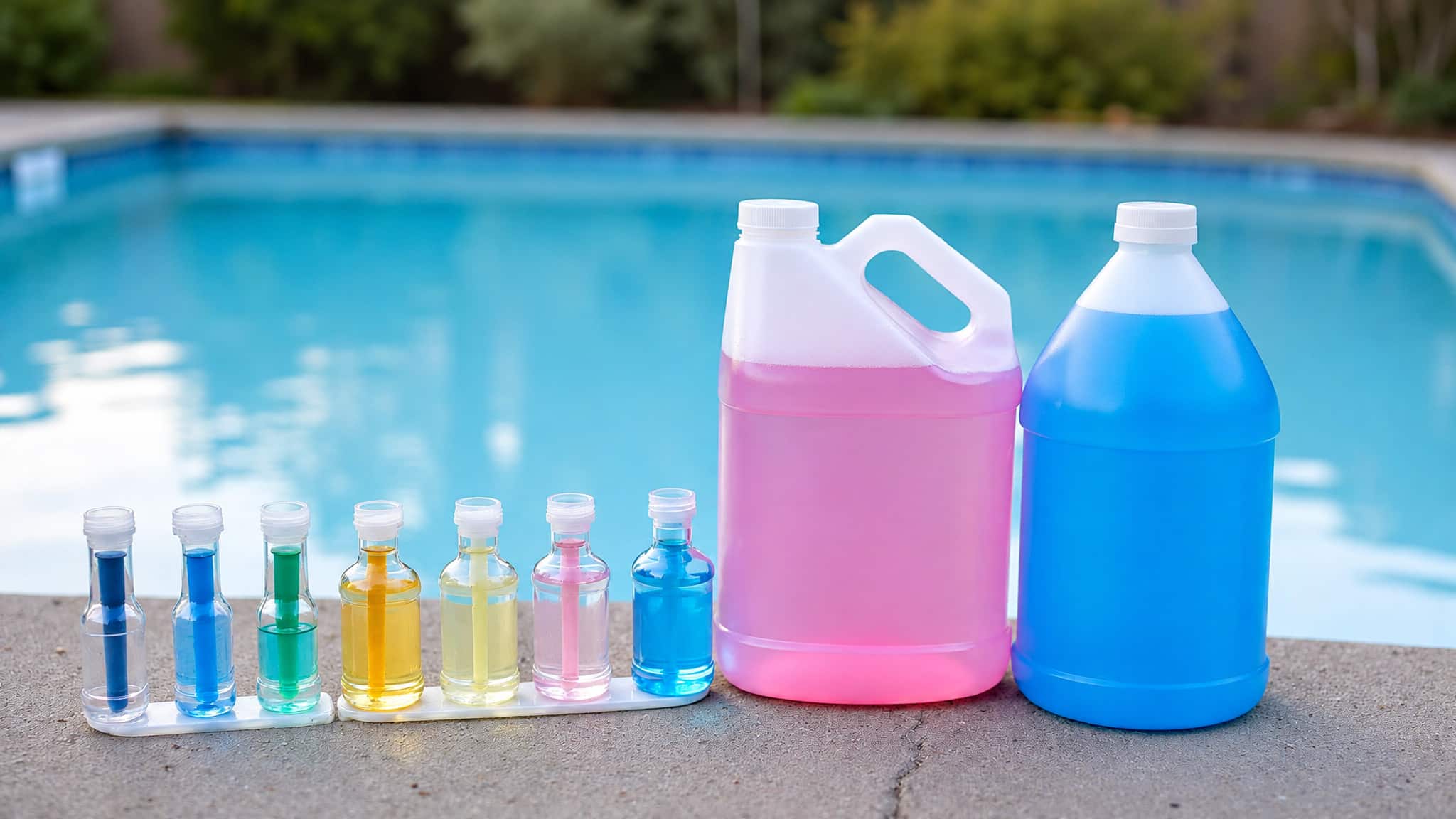
Balance chemicals for an extended absence by testing and adjusting every parameter before departure, because sunlight, heat, and organic load all deplete sanitizer while you’re gone. Start by balancing pH to 7.4–7.6 and total alkalinity to 100–120 ppm, since stable alkalinity buffers pH drift over long absences. Confirm calcium hardness sits between 200 and 400 ppm to protect surfaces and equipment. For outdoor chlorine pools, hold cyanuric acid at 40–60 ppm so UV doesn’t burn off your free chlorine too quickly. Raise free chlorine slightly above the normal 3–5 ppm to build a safety buffer for the days ahead. The night before you leave, apply an oxidizer or shock treatment to eliminate contaminants, so your water starts clean and your sanitizer lasts longer.
How do pool-sitting and automation options compare for a trip
Pool-sitting and automation options compare across four key areas: sanitizer delivery, debris handling, chemistry correction, and repair authority. Automation, including floater-style tablet feeders, chemical feeders, or saltwater chlorine generators, releases sanitizer gradually and maintains consistent balance without daily intervention. Feeder capacity matters here, since longer dissolving time prevents running out mid-vacation. Human support, whether a neighbor, house sitter, or weekly professional service, handles tasks automation can’t, like debris removal, chemistry adjustment, and equipment inspection.
| Automation | Pool-Sitting |
|---|---|
| Steady sanitizer output | Manual chemistry correction |
| No debris removal | Debris skimming and basket clearing |
| Fixed feeder capacity | Emergency repair authority |
For absences under a week, automation often suffices. For longer trips, combine both: let feeders maintain sanitizer while a helper checks equipment and water level.
Should you run the pump on a timer while away
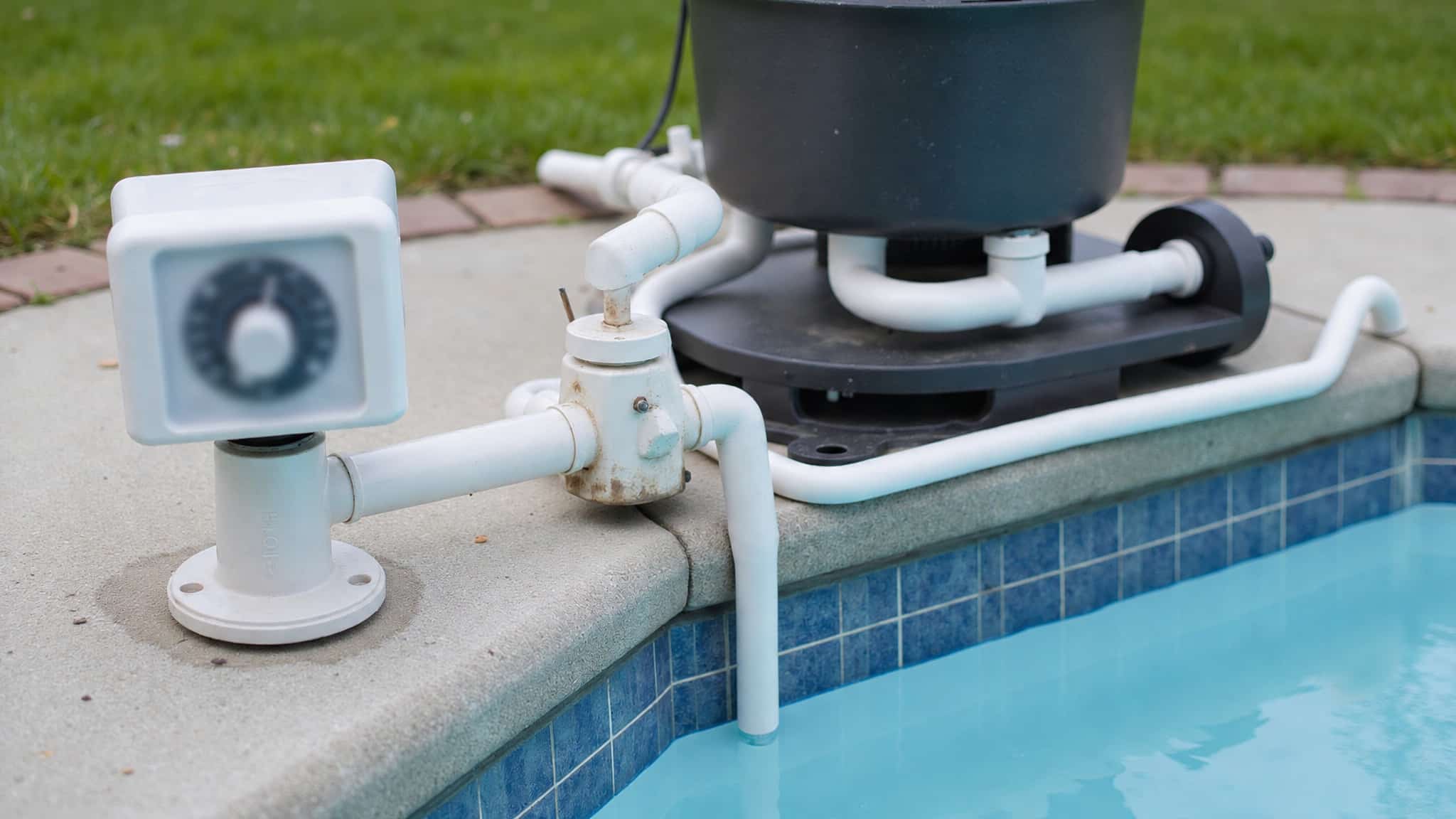
Yes, keep the pump on a timer so water circulates continuously while you’re away. Continuous circulation distributes sanitizer evenly and eliminates dead spots where algae takes hold. Set the timer for roughly 8 to 12 hours of daily runtime, adjusting for weather and pool size. In peak summer heat, extend runtime toward the upper end, since higher temperatures accelerate sanitizer demand and algae growth. In cooler conditions, shorter cycles suffice.
Verify the timer’s on/off cycles fire correctly so you’re not relying on a faulty mechanism during your absence. Proper circulation also supports any chemical feeder or saltwater system you’re using, keeping water balance steadier. Without a working timer, water stagnates, sanitizer settles unevenly, and you’ll return to cloudy or algae-prone water.
How do you find someone to check your pool during a long trip
To find someone to check your pool during a long trip, look to a reliable neighbor, friend, house sitter, or professional pool service, especially for absences longer than about a week. For longer trips or vacation rentals, schedule weekly professional service. A good visit covers chemistry testing, debris removal, equipment inspection, and filter attention, so your sanitizer, pH, and circulation stay within target ranges while you’re gone. If you choose a service company, consider granting emergency repair authority. That way, if the pump, filter, or feeder fails mid-trip, they can respond quickly instead of waiting for your approval. When you pick a helper, walk them through your timer settings, feeder location, and water-level check so they know what “normal” looks like. Clear instructions reduce guesswork and keep your pool stable until you return.
Conclusion
Keeping your pool clean while you are away comes down to setting it up to look after itself: deep clean and balance the water first, raise the chlorine a touch and shock the night before, then let a timer and a feeder carry the circulation and sanitation while you’re gone. For a week or less that prep is usually enough. Past that, the water needs a real set of eyes, someone to skim debris, retest the chemistry, and catch an equipment fault before it turns the pool green. Plan the oversight to match the length of the trip and you come home to clear water, not a recovery project.
Someone to Watch the Pool While You Travel
A timer and feeder hold the line for a few days, but a longer trip needs a person checking the water, clearing debris, and catching a failing pump before you get home to a green pool. Pool Doctor of the Palm Beaches covers exactly that with weekly pool service for travelers around Palm Beach Gardens. Set it up before you leave by calling (561) 586-2815, or contact us with your dates.
Frequently Asked Questions
Can I Close or Drain My Pool Instead for Very Long Trips?
For most trips, closing or fully draining the pool is the wrong move, draining a pool carries real structural risk and is never worth it just to skip maintenance. The better approach for a long absence is to prep the pool to run unattended: deep-clean it, balance the chemistry, set the pump timer for 8 to 12 hours daily, load an automatic feeder, cover the surface, and top off the water. For anything beyond a week, arrange weekly professional service or a trusted helper rather than shutting the pool down.
How Much Does Professional Pool Service Typically Cost per Visit?
Per-visit cost depends on your pool’s size, its condition, and what the visit includes, so a straightforward chemistry-and-skim check sits well below a visit that adds filter work or equipment repair. Weekly service is the usual recommendation for a long absence or a vacation rental, and a good visit covers chemistry testing, debris removal, equipment inspection, and filter attention. It’s also worth granting emergency repair authority, so the service can act fast if the pump or feeder fails while you’re away rather than waiting on your approval.
What Should I Do if I Return to Green or Cloudy Water?
Test your water immediately to check clarity, sanitizer level, and debris buildup before swimming resumes. Skim and remove organic debris, then brush the walls, steps, and tile lines to break up algae. Vacuum settled dirt off the floor and empty the skimmer and pump baskets. Rebalance your chemistry, targeting free chlorine of 3 to 5 ppm and pH 7.4 to 7.6, then shock and run filtration until it clears.
Is It Safe to Leave Pool Lights or Heaters Running While Away?
There’s no need to leave pool lights or a heater running while you’re away, and turning them off removes a small risk and saves energy over a long trip. The one thing you do want running is the pump, on a timer for roughly 8 to 12 hours daily, so the water keeps circulating and the sanitizer stays evenly distributed. Confirm the timer fires correctly before you go, and leave the heater and lights off unless a specific reason, like freeze protection on a rare cold night, calls for them.
How Long Can a Pool Safely Go Without Any Maintenance?
You can typically leave your pool unattended for about a week if you’ve prepped it properly. Before departing, balance your chemistry to pH 7.4–7.6, alkalinity 100–120 ppm, and free chlorine 3–5 ppm, then run your pump 8–12 hours daily on a timer. Beyond seven days, you’ll need a chemical feeder, automated dosing, or a check-in helper. Otherwise, sanitizer depletes, algae grows, and you’ll return to cloudy, unsafe water.