
You’ll need a building permit before construction in Ontario and South Carolina, plus municipal inspection before filling in Ontario. Most jurisdictions require a barrier at least 1.2 m (4 ft) high, with self-closing, self-latching gates and limited openings. Keep climbable objects away from fences, and honor setbacks from decks and structures. California mandates two drowning-prevention features; Florida requires one. Local requirements vary, so verify with your municipality. Here’s what each rule involves.
Key Takeaways
- Building permits are typically required before pool construction, alteration, or barrier work, with inspection often mandated before filling.
- Most jurisdictions require a barrier at least 1.2 m (4 ft) high with self-closing, self-latching gates and high latches.
- Opening limits vary: Quebec restricts to a 10 cm sphere, while Florida caps openings at 4 inches.
- Pools must maintain setbacks from structures and avoid climbable objects like furniture, BBQs, and sheds near fences.
- California requires two drowning-prevention features for qualifying pools, while Florida requires only one.
What are the rules for residential swimming pools
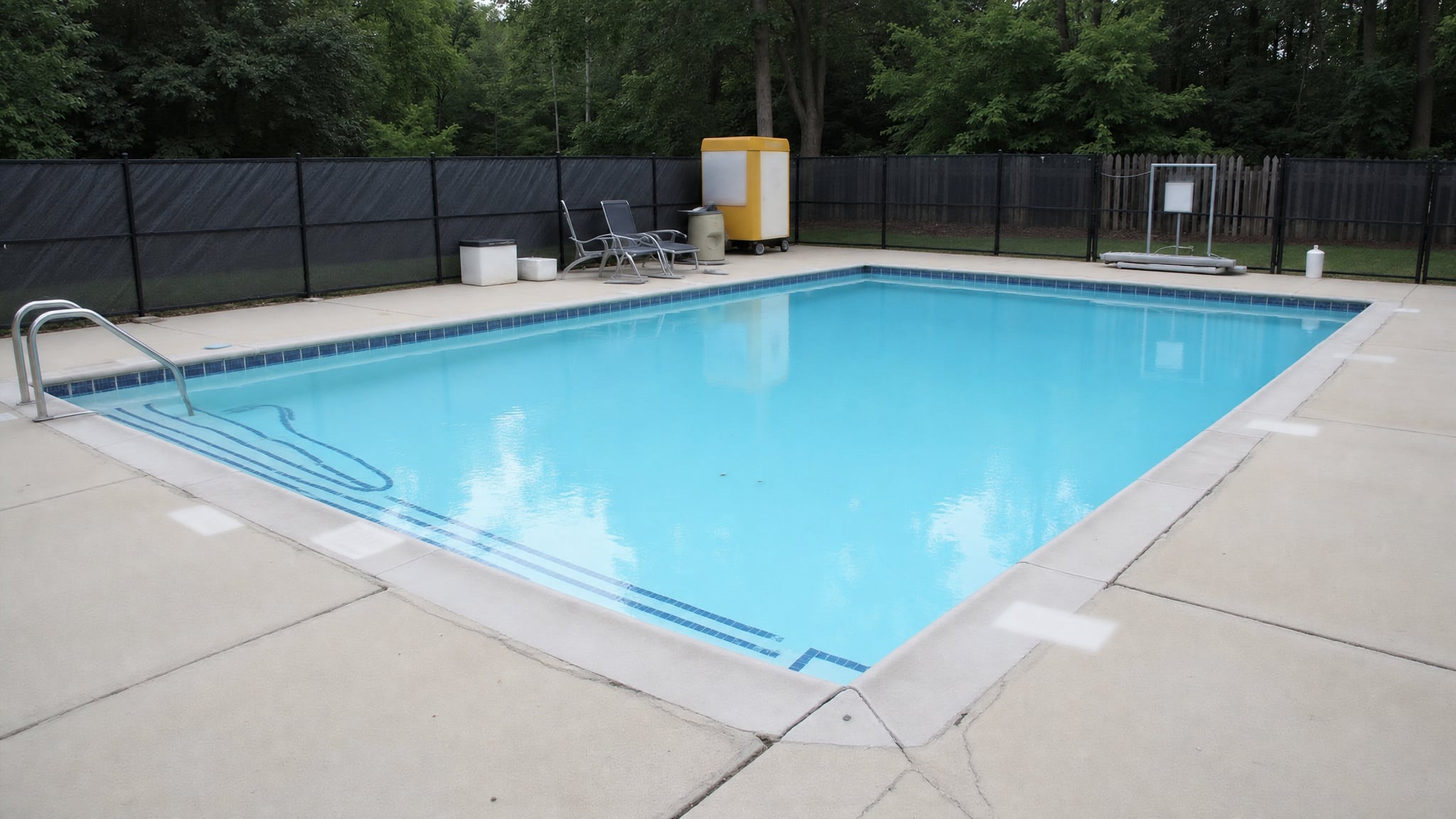
Residential pool rules vary by jurisdiction, so you’ll need to confirm your local requirements before building or modifying a pool. Start with permits: Ontario and South Carolina require a building permit before construction or alteration, and Ontario mandates municipal inspection before you fill the pool with water. Next, address fencing. Most jurisdictions require a minimum barrier height of 1.2 m (4 ft), with restricted openings. Quebec limits openings to a 10 cm sphere, while Florida caps them at 4 inches. Gates must self-close and self-latch, with latch placement out of children’s reach. You’ll also need to observe setbacks, maintaining minimum distance from the pool edge and separation from decks, garages, and other structures. Don’t place climbable objects near the fence, since footholds enable climbing.
What permits do you need to build one
To build a permanent pool, you need a building permit, and both Ontario and South Carolina require one before construction begins. In Ontario, you’ll need a building permit before you construct or alter a pool, including any enclosure or barrier work. You can’t fill the pool with water until municipal inspection and approval confirm compliance with the applicable safety code. In South Carolina, permanent inground pools require a permit before construction, and barriers apply to pools 24 inches or more in depth.
Verify local requirements. Key steps include:
- Securing a building permit before construction or enclosure work
- Scheduling municipal inspection and approval before filling
- Confirming barrier and safety code standards for your jurisdiction
Check your municipality, since requirements vary by location.
What fencing and barrier rules apply
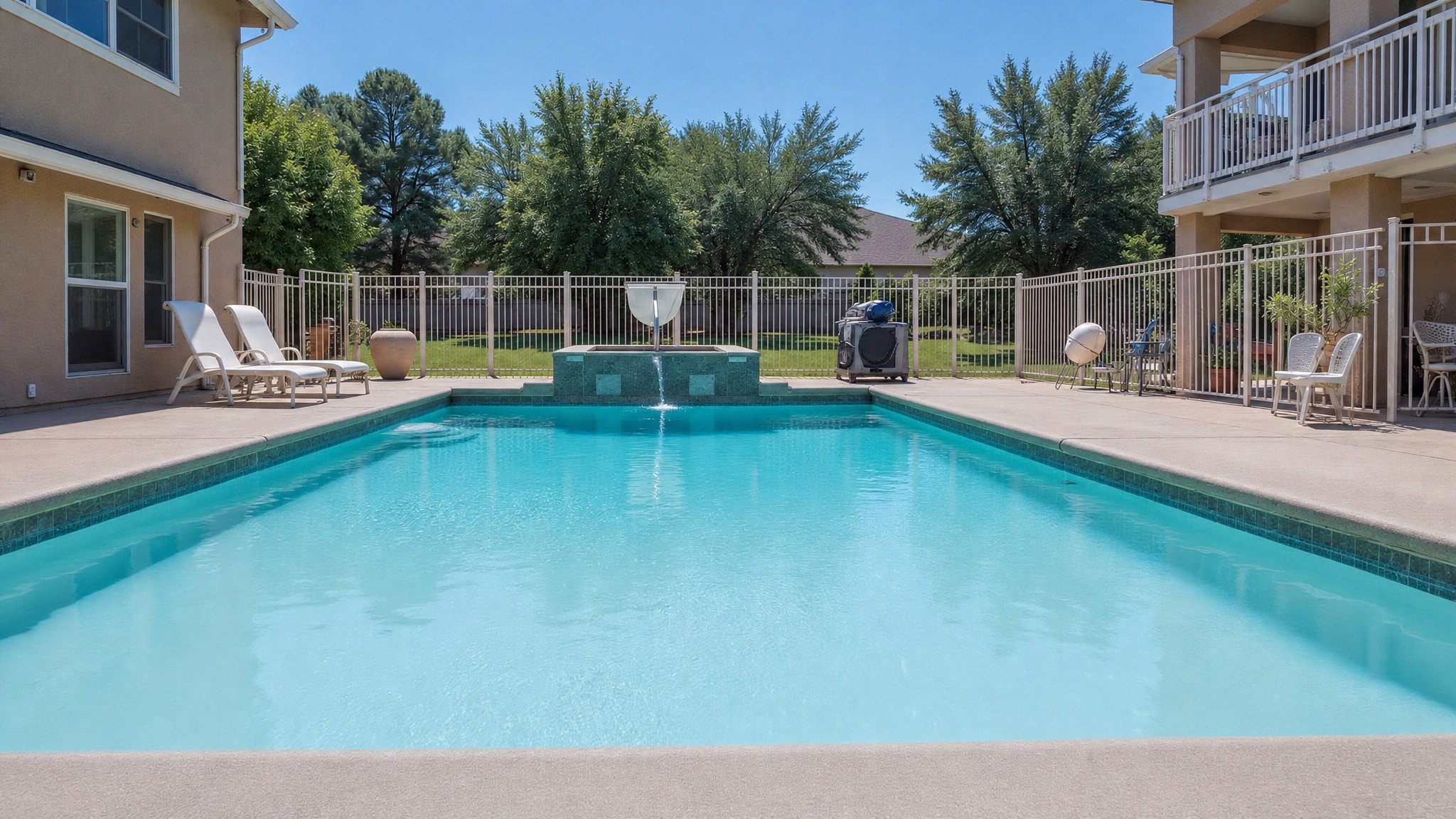
Fencing and barrier rules require you to build a barrier that meets your jurisdiction’s height and opening standards. In Quebec and Ontario, fences must reach a minimum height of 1.2 m (4 ft), and Florida requires at least 4 ft for residential pool barriers. Openings matter too: Quebec prohibits passage of a 10 cm spherical object, while Florida limits openings to 4 inches in diameter. If you’re installing chain-link, Quebec requires slats when mesh openings exceed 30 mm. Don’t place furniture, BBQs, sheds, or other climbable objects near the fence, since Florida and Ontario both prohibit footholds that allow climbing or squeezing through. Ontario also emphasizes non-scalable materials, minimum setback from the pool edge, and separation from decks and garages.
What setback and placement rules should you know
Two placement rules govern where your pool and barrier can sit relative to nearby structures. Ontario guidance emphasizes minimum setback distance from the pool edge and requires separation from adjacent structures like decks and garages. These setbacks prevent nearby construction from compromising barrier integrity or creating unauthorized access points. Quebec guidance reinforces this by prohibiting climbable objects near the fence, since footholds defeat barrier height requirements.
When positioning your pool and barrier, apply these standards:
- Maintain the required setback distance from the pool edge to any fence or structure.
- Separate the barrier from decks, garages, and similar structures that could provide access.
- Keep furniture, BBQs, sheds, and other climbable objects away from the fence perimeter.
Verify municipal setback figures, since local requirements vary.
How do the safety and equipment codes compare
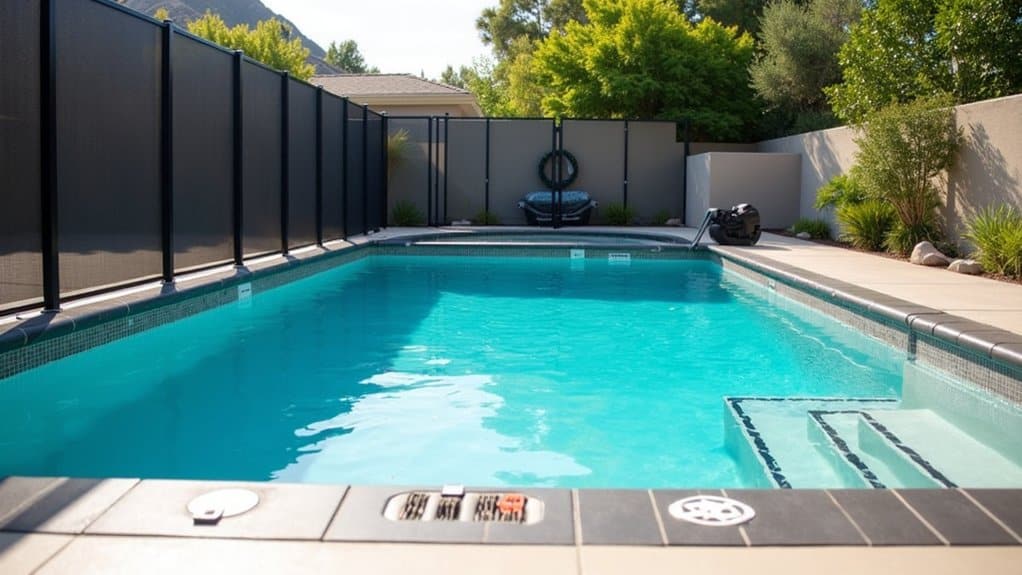
Safety and equipment codes differ mainly in how many drowning-prevention features each state mandates and which devices qualify. California requires at least two drowning-prevention features for qualifying new or remodeled private single-family pools, while Florida requires at least one. Approved options overlap but differ in specificity, and California references recognized standards for removable mesh fencing and safety covers.
| Requirement | Details |
|---|---|
| California minimum | Two approved features |
| Florida minimum | One approved feature |
| California options | Enclosure, mesh fence, cover, exit/in-water alarms |
| Florida options | Fence, safety cover, exit/pool alarms |
You’ll notice Florida recognizes door and window exit alarms plus pool alarms as compliant devices. California’s ASTM references, F2286 for mesh fencing and F1346-23 for covers, impose stricter design conformity than single-feature regimes.
How do you find the specific rules in your area
Find specific rules in your area by starting with your local municipality, since specific requirements vary by jurisdiction and often exceed provincial or state minimums. In Ontario and Quebec, municipal guidance governs permits, inspections, and enclosure standards, so you’ll need to verify local rules before starting any construction or compliance work. Quebec explicitly recommends checking municipal requirements and obtaining necessary permits before completing barrier upgrades.
Start local: municipal rules often exceed provincial minimums, so verify permits and barrier standards before beginning any pool compliance work.
- Contact your municipal building department to confirm permit requirements, setback distances, and barrier specifications for your pool type and depth.
- Review provincial or state statutes for baseline mandates like California’s two-feature rule or Florida’s single-feature requirement.
- Confirm applicable deadlines, such as Quebec’s fall 2026 cutoff ending acquired rights for older installations.
Verify everything against current standards before proceeding.
Conclusion: Understanding the Rules for a Residential Pool
Residential pool rules cover safety barriers, permits, equipment, and sometimes noise and setback requirements, all aimed at keeping pools safe and neighbor-friendly. Because rules vary by location and can change, checking with your local building department before building or renovating is key. Staying compliant protects your family, avoids fines, and keeps the project smooth. Knowing the rules up front makes owning a pool far less stressful. Understanding the most popular pool depth can help you make choices that enhance safety and enjoyment. Different depths cater to various activities, from shallow areas for kids to deeper sections for diving.
Build a Pool That Meets Every Regulation
Residential pool rules and codes change often, and expert builders handle every requirement so you don’t have to. At Pool Doctor of the Palm Beaches in Riviera Beach, FL, our experienced team provides trusted New Pool Construction with full-service permitting and code-compliant designs. Call +1 (561) 586-2815 today and get your free consultation.
Frequently Asked Questions
How Much Does Building a Residential Pool Typically Cost?
Cost depends on the pool type, size, materials, site conditions, and features, so it ranges widely, with inground pools being a major investment and above ground pools far cheaper. Getting quotes for your specific plan gives the clearest budget. Many builders offer financing to spread the cost of a larger project.
What Ongoing Maintenance Keeps Pool Water Safe and Clean?
Regular maintenance means testing and balancing the water a few times a week, sanitizing with chlorine or a salt system, skimming and brushing, cleaning the filter, and keeping the pump running. Consistent care keeps the water safe, clear, and comfortable. A maintenance routine, or a pool service, makes it easy to stay on top of.
Does a Pool Increase or Decrease Home Insurance Premiums?
A pool usually increases premiums somewhat, since it adds value and liability that insurers account for, and many require safety barriers. It can be worth adding liability coverage. Tell your insurer about the pool and confirm what is covered, so your protection is accurate and any discounts for safety features apply.
Are There Noise Restrictions for Pool Pumps and Equipment?
Some areas and HOAs have noise rules that can affect where and when pumps and equipment run, especially near property lines. Modern variable-speed pumps are quiet and can help. Check local ordinances and HOA guidelines, and place or enclose equipment thoughtfully to keep noise from bothering neighbors.
How Long Does Building a Residential Pool Usually Take?
An inground pool often takes several weeks to a few months from start to finish, depending on the type, weather, and permitting, while above ground pools go up much faster. Site conditions and inspections affect the schedule. Your builder can give a realistic timeline for your specific project.