


Your fiberglass pool signals failure through unmistakable warning signs. Watch for fading color and chalky residue, both indicating gel coat breakdown. Run your hand across the surface, rough, sandpaper-like texture means the protective finish has failed. Structural cracks longer than six inches expose compromised laminate, while bulging walls reveal shifting soil pressure. Unexplained water loss points to a shell breach. When these problems compound, replacement becomes urgent. Understanding each sign helps you act decisively.
Key Takeaways
- Fading color, chalky residue, or rough sandpaper-like texture signals gel coat breakdown and protective finish failure.
- Structural cracks longer than six inches, or recurring sharp cracks, indicate compromised laminate beyond cosmetic wear.
- Bulging walls or visible warping reveal shifting soil, saturated backfill, or internal shell separation.
- Persistent, unexplained water loss points to a shell breach or plumbing failure requiring immediate evaluation.
- Pools past 25 to 50 years with combined leaks, cracks, and rising repair costs warrant replacement.
What are the signs your fiberglass pool needs replacing
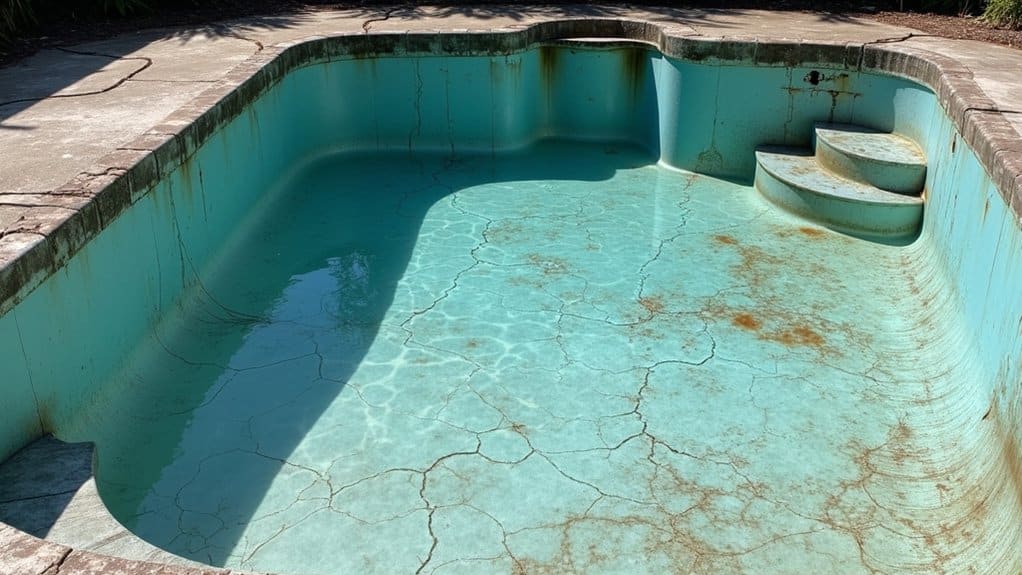
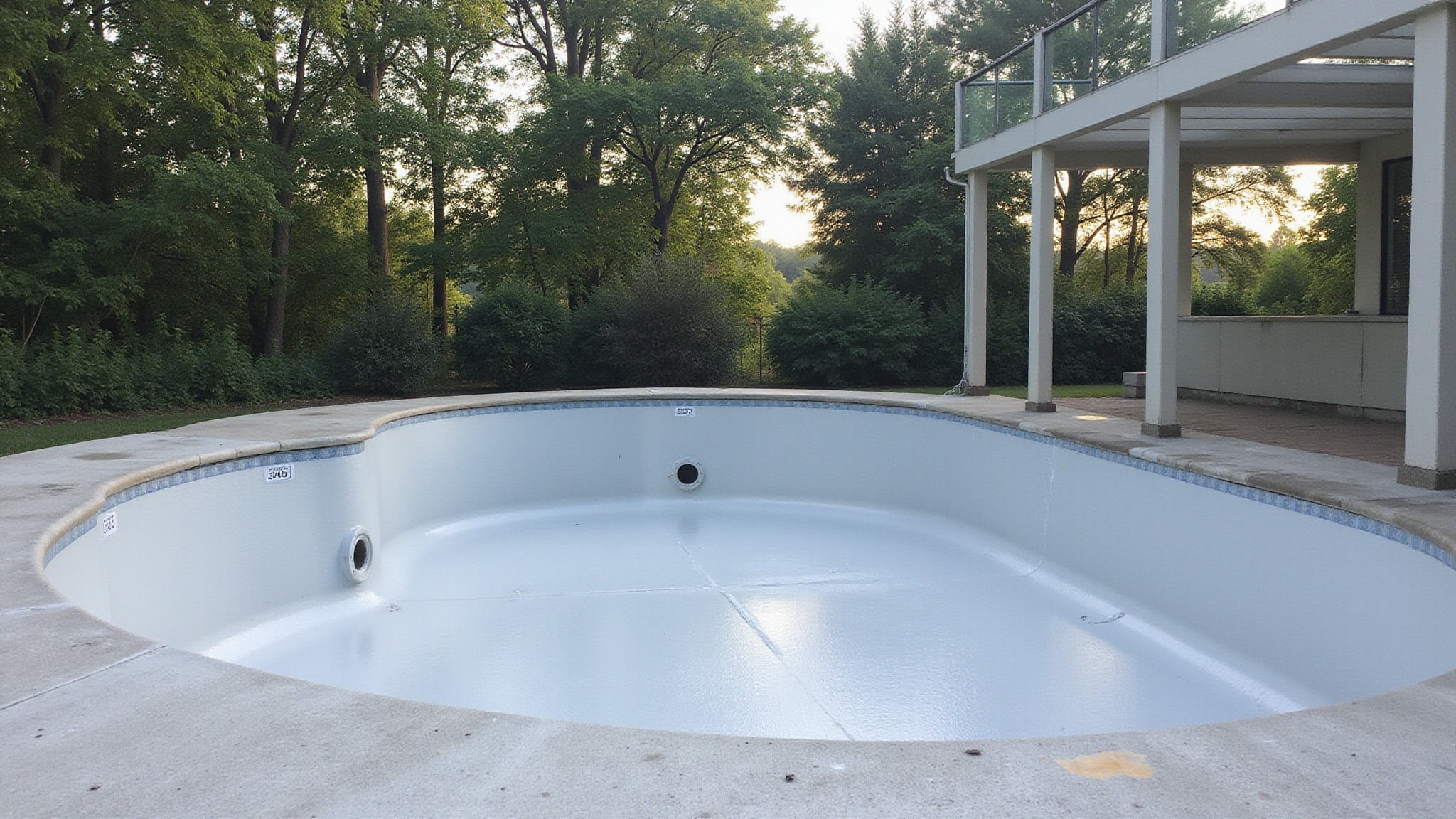
Your fiberglass pool needs replacing when you spot warning signs that signal deeper failure rather than cosmetic wear. Start with the shell surface: fading color, chalky residue, and a rough, sandpaper-like texture indicate the gel coat is breaking down. Escalate your concern when structural cracks longer than six inches appear, feel sharp, or keep recurring. Pair those cracks with dropping water levels or seepage behind the surface, and you’re likely dealing with a breach that demands immediate evaluation. Bulging walls point to saturated backfill or shifting soil pushing against the shell. Delamination, where the fiberglass separates internally, confirms serious compromise. When several of these signs converge, replacement outranks another repair.
What surface damage points to a failing shell
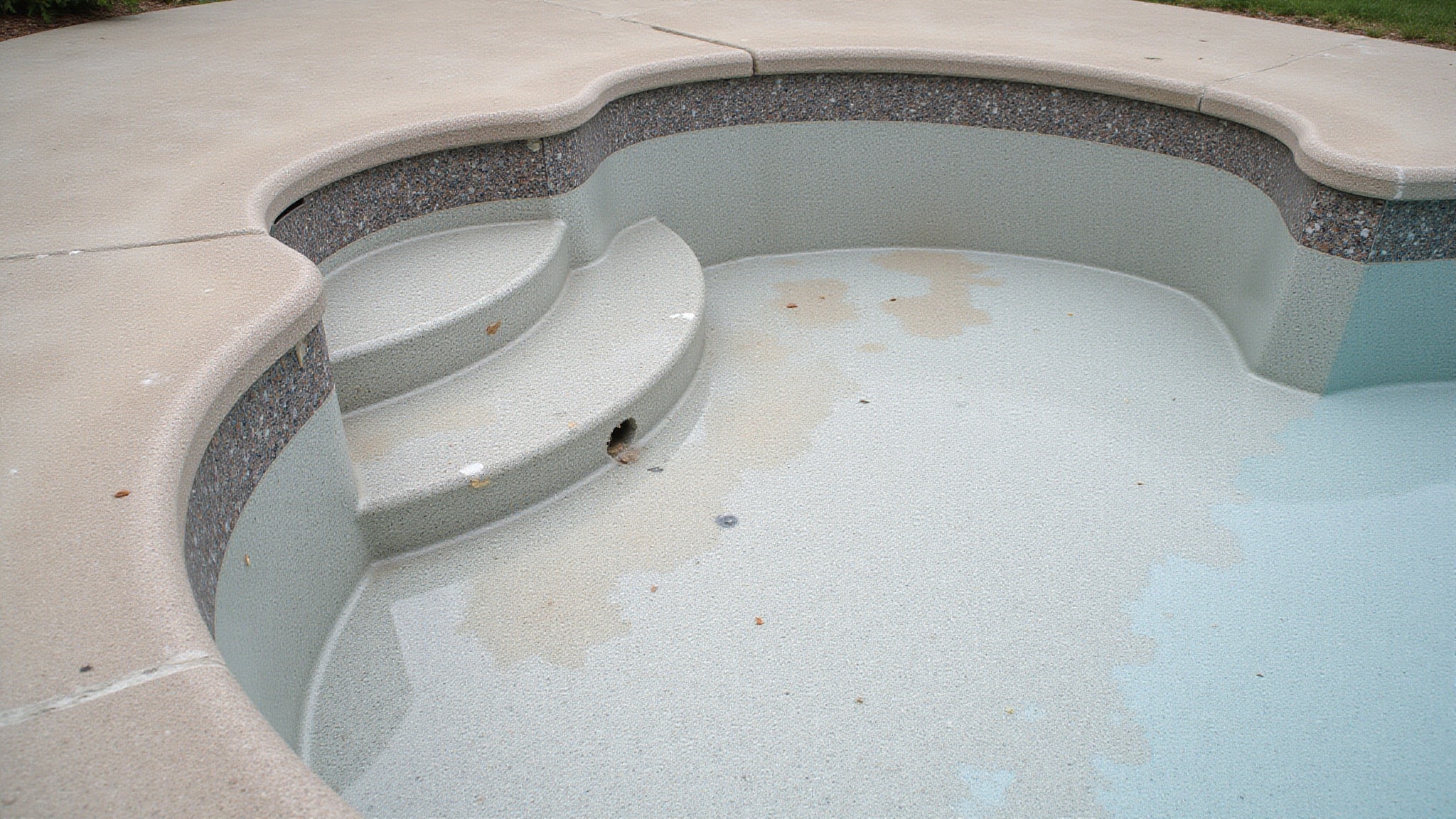
Surface damage that points to a failing shell includes color changes, texture deterioration, and cracking in the gel coat, so read it closely. Start with color: fading, chalky white residue, or persistent discoloration that won’t clean off signals UV breakdown and aging. Next, run your hand across the shell. A rough, gritty, sandpaper-like texture means the protective finish is deteriorating. Watch for loose gel coat that lifts, peels, or flake-checks, plus bubbling, blistering, or raised spots that show the surface is no longer stable.
Cracks demand scrutiny. Hairline and spider cracks may start cosmetic, but expanding cracks, cracks longer than six inches, or sharp, raised edges indicate stress. When cracking pairs with leaks or visible deformation, you’re facing structural compromise, not simple wear.
What structural cracks or bulges signal the end
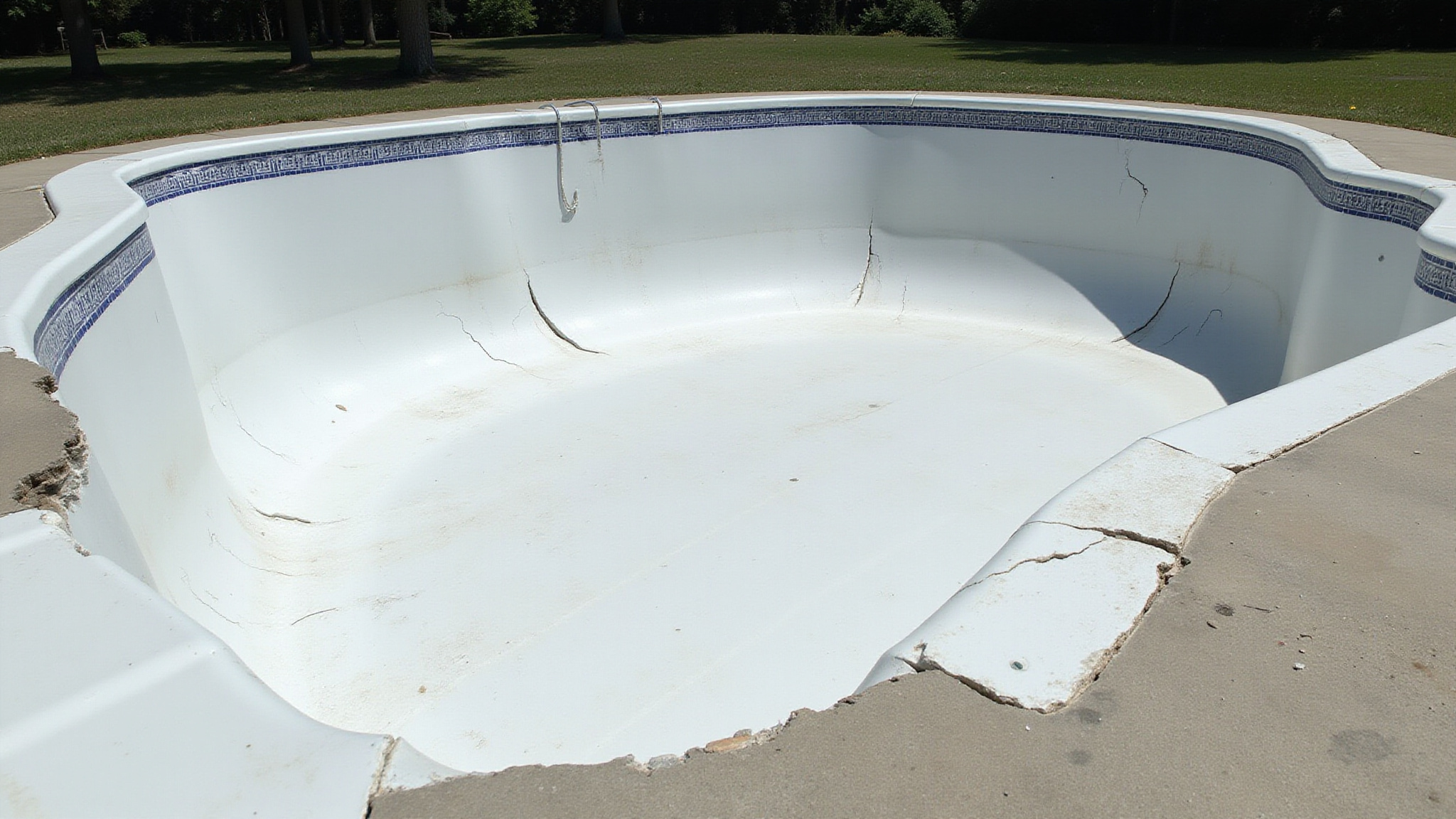
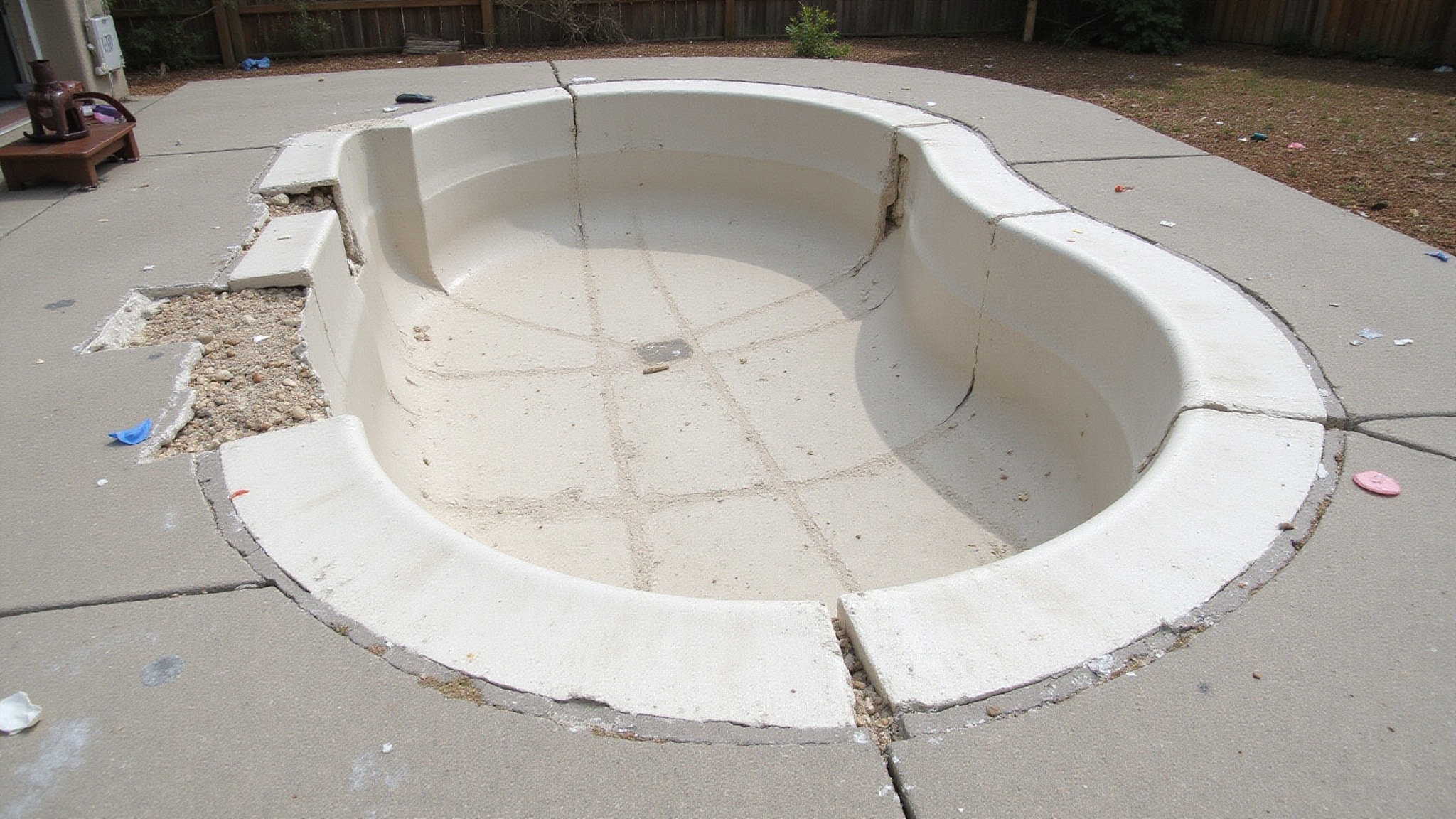
Structural cracks and bulges that signal the end include expanding or recurring cracks, cracks longer than six inches, sharp raised edges, spider cracks, bulging walls, and visible warping. When cracks and bulges appear together, you’re no longer dealing with cosmetic wear, you’re seeing the shell fail structurally. Hairline cracks may start as cosmetic, but expanding or recurring cracks signal deeper stress. Watch for cracks longer than six inches or edges that feel sharp and raised, since these indicate the gel coat and laminate are compromised.
- Spider cracks point to aging, repeated movement, or concentrated stress in the shell.
- Bulging walls reveal saturated backfill or shifting soil pushing against the fiberglass.
- Delamination or visible warping shows the shell is separating internally and losing its original shape.
When cracking pairs with leaks or distortion, you’re facing structural compromise. Get a professional inspection immediately, these combined signs typically mean replacement, not another round of patching.
How do leaks and water loss reveal a bigger problem
Persistent water loss you can’t explain often points to a shell breach or plumbing failure, revealing a bigger problem than simple evaporation. A dropping water level might seem like ordinary evaporation, but unexplained loss signals trouble. When you notice water seepage behind the surface, treat it as a crack or breach that demands immediate evaluation. Leaks in the pool structure rank as a direct sign of fiberglass damage, not a minor nuisance. Sometimes ill-fitted plumbing drives the loss even when the shell itself isn’t the primary culprit, so you’ll need to isolate the source before assuming the worst. Don’t ignore ongoing water loss; investigate it early, because minor damage escalates fast. When leaks pair with cracking or visible deformation, you’re likely facing structural compromise that pushes you toward full replacement rather than a patch.
How does age factor into the decision
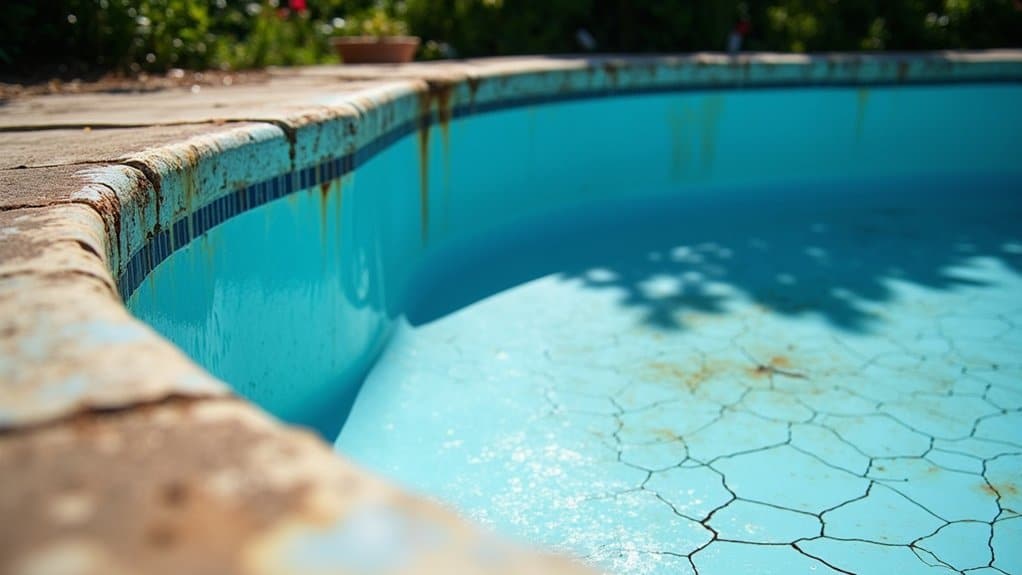
Age factors into the decision by changing how you interpret every other symptom, since fiberglass pools typically last 25 to 50 years and age becomes decisive as your shell nears the end of its service life. As your pool approaches this threshold, you’ll notice that cosmetic issues and structural warnings compound rather than resolve. Age alone doesn’t dictate replacement, but it shapes the significance of everything else you observe. Lifespan of pool plaster plays a critical role in the overall maintenance of your pool. Understanding when the plaster needs replacement can help prevent further damage to the structure and ensure the longevity of your pool.
Watch for these age-related indicators:
- Frequent repairs or rising maintenance costs that signal patching is no longer practical
- Persistent stains, roughness, and cracks appearing together, pointing to deeper deterioration
- Surface failure combined with leaks or bulging, which demands a more urgent replacement decision
When multiple warning signs surface simultaneously on an aging shell, schedule a professional inspection, especially if structural damage pairs with water loss.
Should you repair or replace the fiberglass pool
Repair the fiberglass pool if the damage is isolated, and replace it if the damage is systemic. A single hairline crack, a patch of faded gel coat, or minor roughness responds well to resurfacing. But when surface failure combines with leaks, bulging, or delamination, you’re facing structural compromise that patching won’t resolve. Use the following guide to match symptoms to the appropriate action.
| Condition | Recommended Action |
|---|---|
| Isolated hairline cracks | Repair |
| Chalky or faded gel coat | Resurface |
| Expanding cracks with leaks | Replace |
| Bulging walls or delamination | Replace |
| Frequent, escalating repairs | Replace |
If you’re seeing multiple warning signs at once, especially structural movement paired with water loss, schedule a professional inspection before committing to any repair budget.
How do you find a replacement specialist
Find a replacement specialist by verifying that the installer holds fiberglass-specific certifications and can document past shell replacements, not just cosmetic resurfacing jobs. You need someone who’s qualified to remove and reinstall a fiberglass shell, not a general contractor who dabbles in pools. Ask for references tied to structural work, since removing a shell involves excavation, backfill management, and plumbing reconnection. An inspector can also provide insights into the condition of the old above ground pool area, ensuring that you comprehend any potential issues before making a decision.
When you evaluate candidates, confirm the following:
- Licensing and insurance that specifically cover excavation and structural pool work
- Documented experience with full shell removal, delamination, and bulging repairs
- Written scope and warranty detailing backfill, plumbing, and gel coat handling
Choose a specialist who inspects your site directly before committing to any replacement estimate.
Conclusion: Knowing When to Replace
A fiberglass pool that keeps cracking, blistering, or losing water past the point of patching is telling you it has reached the end of its run. Replacement is a bigger job than a repair, but a failing shell only gets more expensive to babysit. Weigh the cost of constant fixes against a fresh, sound pool and the decision usually makes itself. How to replaster a pool may seem daunting, but it’s a crucial step in maintaining your investment. Proper preparation and the right materials can make the process smoother and more effective.
Upgrade to a Beautiful New Fiberglass Pool
When your fiberglass pool has reached the end of its life, replacement with a modern San Juan pool brings lasting beauty and easy care. At Pool Doctor of the Palm Beaches in Jupiter, FL, our experienced team provides trusted San Juan Fiberglass Pools with premium quality and expert installation. Call +1 (561) 586-2815 today and get your free estimate.
Frequently Asked Questions
How Much Does It Cost to Replace a Fiberglass Pool?
Most full replacements land somewhere between 15,000 and 40,000 dollars, depending on the size of the shell, how hard the old one is to remove, and the site access for the new one. Getting two or three local quotes is the only way to pin down your number, since demolition and crane costs swing the total a lot.
How Long Does a Fiberglass Pool Replacement Take?
From removal to a swimmable pool, plan on roughly two to four weeks in good weather. Pulling the old shell and prepping the hole goes quickly, but permits, plumbing, and the deck work around the new pool add time. Rain and inspection scheduling are the usual reasons a project stretches longer.
Can You Replace a Fiberglass Pool in Winter?
In mild climates like South Florida, yes, and the off-season often means faster scheduling and better crew availability. Fiberglass installs are less weather-sensitive than concrete since there is no plaster curing to worry about. The main limits are frozen ground or heavy rain, neither of which is much of an issue locally.
Does Homeowners Insurance Cover Fiberglass Pool Replacement?
It depends on why the pool failed. Damage from a covered event such as a storm or a fallen tree may qualify, but gradual wear, age, or ground settling is usually excluded. Read your policy and call your agent before assuming anything, since pool coverage varies widely from one carrier to the next.
What Should I Do With the Old Fiberglass Shell?
The contractor typically breaks it up and hauls it off as part of the job, so it goes to a construction debris facility. Fiberglass is not curbside recyclable, which is why removal and disposal show up as a line item on the quote. Confirm haul-away is included so you are not left with a shell in the yard.