
Your pool pump usually warns you before it fails. Watch for reduced flow from the return jets, longer run times, and weak circulation, all signs of a clogged impeller or dirty filter. Listen for grinding, screeching, or humming without water movement, which points to worn bearings or electrical faults. Notice overheating, repeated shutoffs, water pooling, or air bubbles in the jets too. Catching these early symptoms saves you money, and knowing what comes next matters.
Key Takeaways
- Reduced water flow from return jets, often caused by a clogged impeller or dirty filter, signals declining performance.
- Grinding, screeching, or humming noises indicate worn bearings, trapped debris, or capacitor problems.
- Overheating and repeated shutoffs point to electrical faults, restricted flow, or failing bearings triggering thermal cutoff.
- Water pooling or dripping near the housing reveals seal failures or plumbing leaks needing prompt attention.
- Air bubbles in the jets, loss of prime, or frequent breaker trips suggest failing seals or electrical issues.
What are the signs a pool pump is going bad
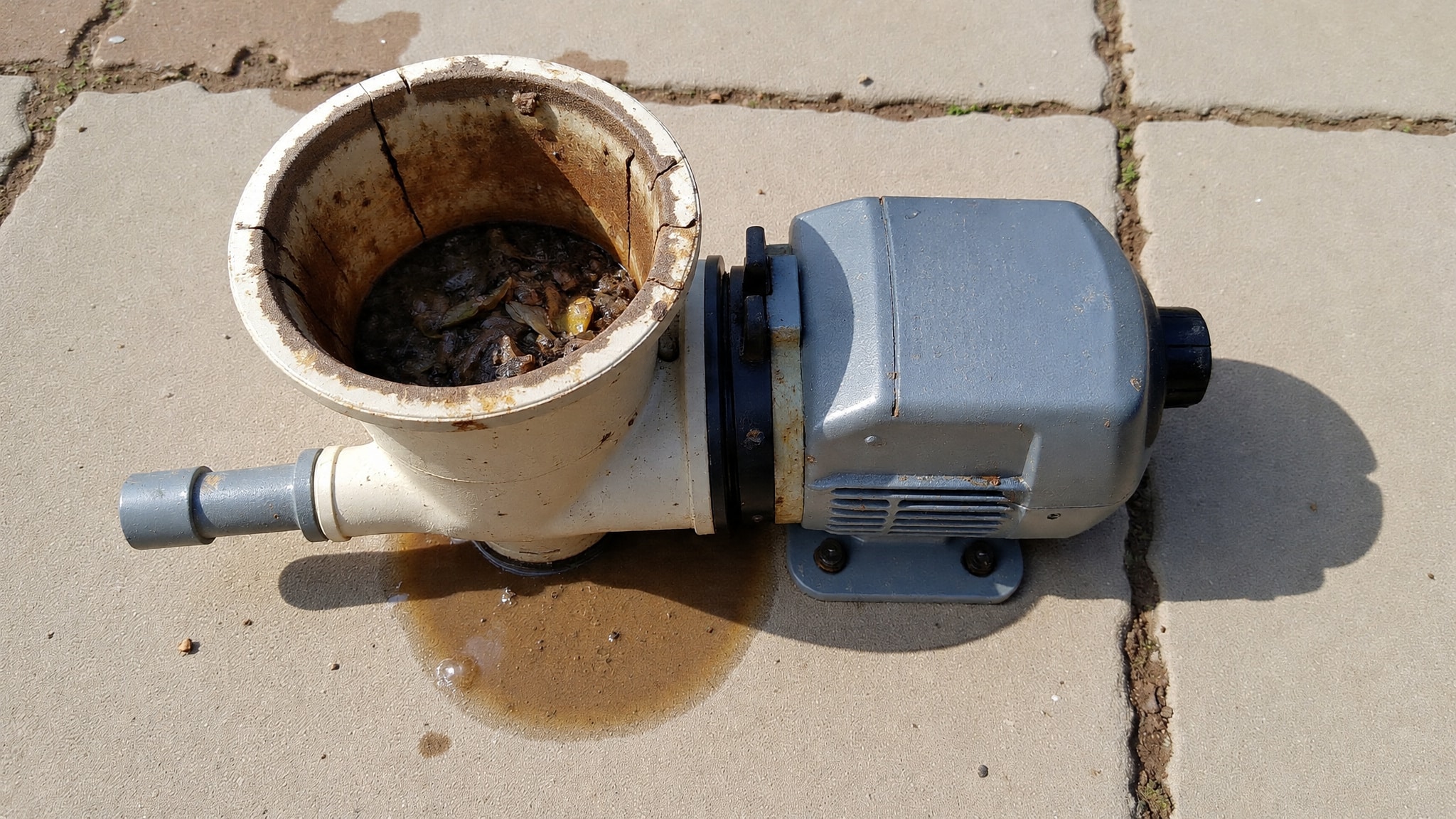
The signs a pool pump is going bad include reduced water flow, unusual noises, overheating, leaks, and frequent breaker trips. Reduced water flow from the return jets is often the earliest indicator that a clogged impeller, dirty filter, or weakening motor is straining the system. A noisy motor, grinding, screeching, or humming, usually signals worn bearings, trapped debris, or a failing capacitor. Watch for overheating and repeated shutoffs, which point to electrical or motor trouble. Water pooling around the housing suggests seal or plumbing leaks, while air bubbles in the jets indicate suction problems. You might also see frequent breaker trips, priming issues, or burning odors. Longer run times for the same cleaning result confirm declining output. Catch these symptoms early, and you’ll avoid a complete pump breakdown.
What noises and leaks indicate pool pump problems
Noises and leaks indicate pool pump problems by pointing to specific types of failure. Grinding or screaming usually means worn bearings. A loud motor signals friction inside the housing, while humming without water movement warns of an electrical or start-up fault. Rattling often means trapped debris or a capacitor problem.
Leaks tell a parallel story. Water pooling around the housing points to failing seals or plumbing, and visible dripping near the base needs prompt attention. Air bubbles in the return jets mean air is entering the system, often through the same compromised seals. When you spot leaks and lose suction together, seal failure is the likely culprit.
Why is your pool pump losing pressure or not priming
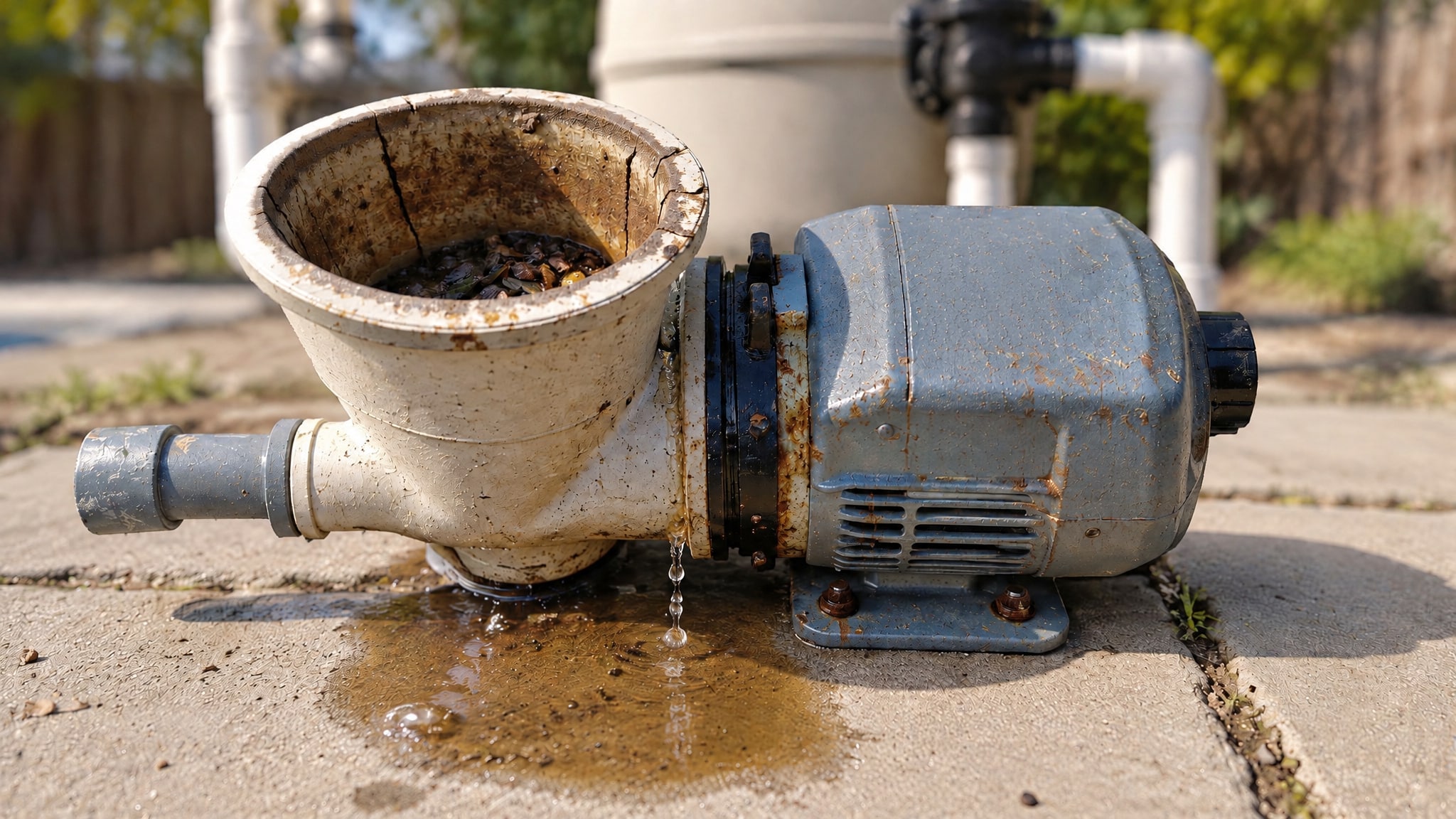
Pressure loss and priming failures trace back to two main causes: restricted flow and air intrusion. When you notice weak circulation from your return jets, start by inspecting the impeller. A clogged impeller chokes water movement and produces low flow before the pump fails completely. Check your filter next, since accumulated debris restricts intake and forces the motor to work harder.
Air intrusion causes priming problems you’ll recognize as bubbles in the return jets or a pump that won’t hold prime. Trace this to failing seals, a loose pump lid, or leaks along the suction line. Water pooling near the housing confirms a seal breach.
Address these issues early, because reduced flow and lost suction accelerate motor strain and hasten total failure.
What causes a pool pump to overheat or shut off
A pool pump overheats or shuts off because of restricted flow, failing bearings, or an electrical or motor fault triggering the thermal cutoff. When your pump runs hot, then shuts off, you’re seeing a motor protecting itself from unsafe temperatures. Overheating often traces back to restricted flow, so check for a clogged impeller, dirty filter, or closed valve starving the pump. Weak circulation forces the motor to work harder, driving temperatures higher. You’ll also find that failing bearings add friction, generating excess heat inside the housing. A pump that starts, then stops, usually points to an electrical or motor fault triggering the thermal cutoff. Watch for overheating paired with weak flow or unusual noise, that combination confirms internal strain accelerating damage and pushing your pump toward complete failure.
How do repair and replacement costs compare
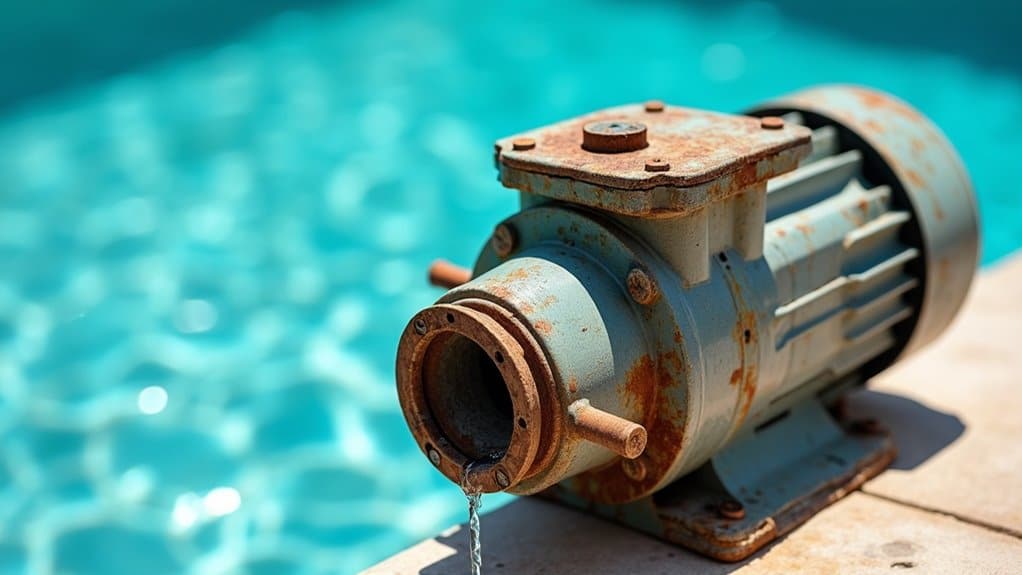
Repair costs typically run lower than replacement when the failed component is minor and the pump is newer, while replacement wins out once a motor burns out or corrosion spreads. The decision usually comes down to which component failed and how old your pump is. A worn bearing, faulty capacitor, or leaking shaft seal often justifies a targeted repair, especially on newer units.
| Failed Component | Typical Recommendation |
|---|---|
| Capacitor or start switch | Repair; inexpensive fix |
| Shaft seal or bearings | Repair if pump is under 5 years |
| Burned-out motor | Replace motor or full unit |
| Cracked housing or old pump | Replace entirely |
If your pump’s approaching eight to ten years, repeated repairs rarely pay off. Factor in energy efficiency too. An aging motor often costs more to run than a replacement saves.
How do you decide whether to fix or replace a failing pool pump
Fix a failing pool pump when the problem is cheap and the pump is relatively new, and replace it when the pump is aging or the repair costs too much. The decision comes down to three factors: what failed, how old your pump is, and how much you’re spending to keep it running. A worn seal or capacitor is cheap and worth repairing. A burned-out motor on an aging pump usually isn’t. Weigh these signals before you commit:
- Age: Pumps past 8–10 years rarely justify major repairs.
- Failure type: Seals, bearings, and capacitors repair easily; motor burnout doesn’t.
- Repair frequency: Multiple fixes within a year signal replacement.
- Energy use: Rising costs from an inefficient pump favor a newer, variable-speed model.
- Repair cost ratio: When repairs exceed half a new pump’s price, replace it.
Match the fix to the diagnosis, not the symptom.
Conclusion
The signs your pool pump is failing rarely arrive all at once, they build: weaker returns, longer run times for the same result, new noises, then overheating and lost prime. Caught early, most trace back to something cheap like a clogged impeller, a worn seal, or a tired capacitor, and a quick fix buys years. Ignored, those same symptoms cascade into a burned-out motor and a full replacement. Keep an eye on the flow, the sound, and the run time, and weigh any major repair against the pump’s age before you spend on it.
Repair Now or Replace Later
Most failing pumps give you a short window where a cheap fix still beats a full replacement, and the trick is knowing which one you’re looking at. Pool Doctor of the Palm Beaches can tell the difference, diagnosing the fault and handling the repair through its pool maintenance service for pools around Jupiter. Contact us with what your pump’s doing, or reach a technician at (561) 586-2815.
Frequently Asked Questions
How Long Does the Average Pool Pump Last?
You’ll typically get 8 to 12 years from a pool pump, though that range shifts based on how hard you run it and how well you maintain it. If you’re diligent about cleaning filters, clearing debris, and addressing early warning signs, you’ll push toward the upper end. Neglect maintenance, run it constantly, or ignore unusual noises and leaks, and you’ll likely see failure much sooner than expected.
Can You Run a Pool Pump Too Often?
Yes, you can run a pool pump too often, and doing so accelerates wear. Excessive runtime strains the motor and bearings, generating heat that speeds internal damage. You’ll often notice overheating, repeated shutdowns, or new grinding and humming noises before failure. Continuous operation also raises energy use without added benefit. Match your runtime to your pool’s turnover needs, usually 8 to 12 hours daily, so you’re not overworking the motor unnecessarily.
How Often Should a Pool Pump Be Serviced?
You should service your pool pump at least once a year, though inspecting it seasonally catches problems earlier. Watch for reduced flow, unusual noises, or overheating between services, since these signal internal strain before failure. If you notice leaks, air bubbles, or frequent shutdowns, don’t wait for the annual check, address them right away. Regular attention to bearings, seals, and the impeller keeps your pump running efficiently and extends its lifespan.
Does Covering a Pool Pump Extend Its Lifespan?
Yes, covering your pump helps extend its lifespan. A proper cover shields the motor housing from rain, sun, and debris that accelerate corrosion and wear. You’ll reduce moisture reaching electrical components, which lowers your risk of breaker trips and start-up failures. It also keeps debris away from the impeller and vents, so you’ll avoid overheating and reduced flow. Just make sure it’s ventilated, trapped heat can cause the same damage you’re preventing.
Can Hard Water Damage a Pool Pump?
Yes, hard water can damage your pool pump over time. Mineral-heavy water leaves scale deposits inside the housing, on the impeller, and around seals. As buildup accumulates, you’ll notice reduced water flow, longer run times, and rising energy use as the motor works harder. Scale can also cause overheating and premature bearing wear, triggering unusual noises. If you’re spotting residue or corrosion around the motor, that scaling’s already compromising performance.