
Under most model codes, your pool barrier must stand at least 48 inches (4 feet) high, measured from the exterior grade around the entire perimeter. The ISPSC and CPSC both cite 48 inches as the minimum, though the CPSC prefers 5 feet or higher. Height alone won’t cut it, you’ll also need compliant gates, gaps, and openings. Local codes can push these numbers higher, so it pays to know what applies to you. Common pool depths can vary significantly based on local regulations and safety standards. Understanding these requirements is crucial for ensuring that your pool is not only compliant but also safe for use.
Key Takeaways
- The minimum pool barrier height under most model codes, including the ISPSC, is 48 inches (4 feet) around the entire perimeter.
- The CPSC treats 4 feet as the minimum but recommends 5 feet or higher for better safety.
- Barrier height must be measured from grade on the exterior side to avoid undercounting the true height.
- Local codes may exceed the baseline, such as Maryland’s 60-inch semipublic pools and 72-inch requirements for certain barriers and spas.
- Height works with other controls like bottom-gap limits, 4-inch opening restrictions, and self-closing, self-latching gates.
What is the minimum height for pool barriers under code
The minimum height for pool barriers is generally 48 inches (4 feet) under code. That figure is the most common minimum in model code guidance and many local safety code adoptions, including the International Swimming Pool and Spa Code. When you check your fence height, measure from grade on the exterior side, the surface facing away from the pool, so you don’t undercount. That 48-inch minimum must hold around the entire perimeter, not just one section. Keep in mind some jurisdictions demand more: Maryland’s semipublic pool rules require 60 inches, and certain barriers reach 72 inches. Height alone won’t pass inspection, though. Your gate must be self-closing and self-latching, and bottom gaps, openings, and climbable features all count. Always defer to your adopted local code.
Why do these height codes exist
Height codes exist because a barrier’s primary job is to keep young children away from the water when no one’s watching. A 48-inch minimum forces a height that a small child can’t easily climb or reach over, buying critical time and reducing unsupervised access.
The height requirement works alongside other controls, bottom clearance limits, opening restrictions, and self-closing, self-latching gates, to form a complete safety system. You can’t rely on height alone. A tall barrier fails its purpose if a gate stays propped open or a gap lets a child slip underneath.
Codes set 48 inches as the baseline, with 60 inches or more required in stricter jurisdictions, because taller barriers further limit climbability. The measurement stays on the exterior side to prevent undercounting effective height.
What is the standard minimum barrier height
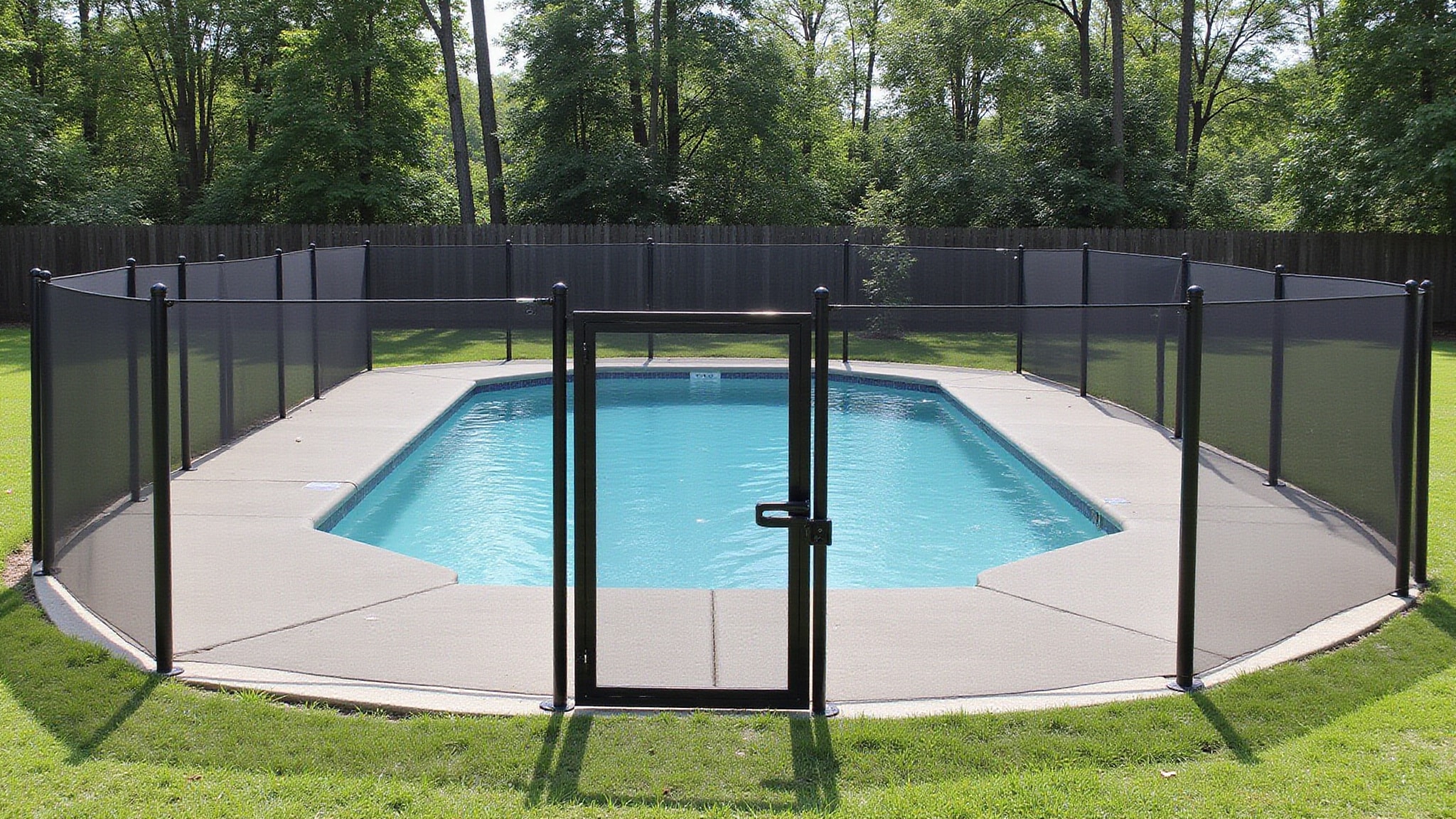
The standard minimum barrier height is 48 inches, that’s 4 feet, in most residential jurisdictions. This baseline comes from model code guidance, CPSC safety barrier guidelines, and the International Swimming Pool and Spa Code (ISPSC), all of which cite 48 inches as the floor.
You’ll measure that height from grade on the outside of the barrier, the side facing away from the pool. That exterior-face method prevents you from undercounting height using the pool’s interior side. Maintain the full 48 inches around the entire perimeter. Backyard size for an inground pool plays a crucial role in determining the overall aesthetics and functionality of your outdoor space. Consider how the dimensions will fit into your landscaping and whether you have enough room for both the pool and surrounding amenities.
Keep in mind the CPSC calls 4 feet a minimum and considers 5 feet or higher preferable. Always confirm your adopted local code first.
How do gate and gap requirements factor in
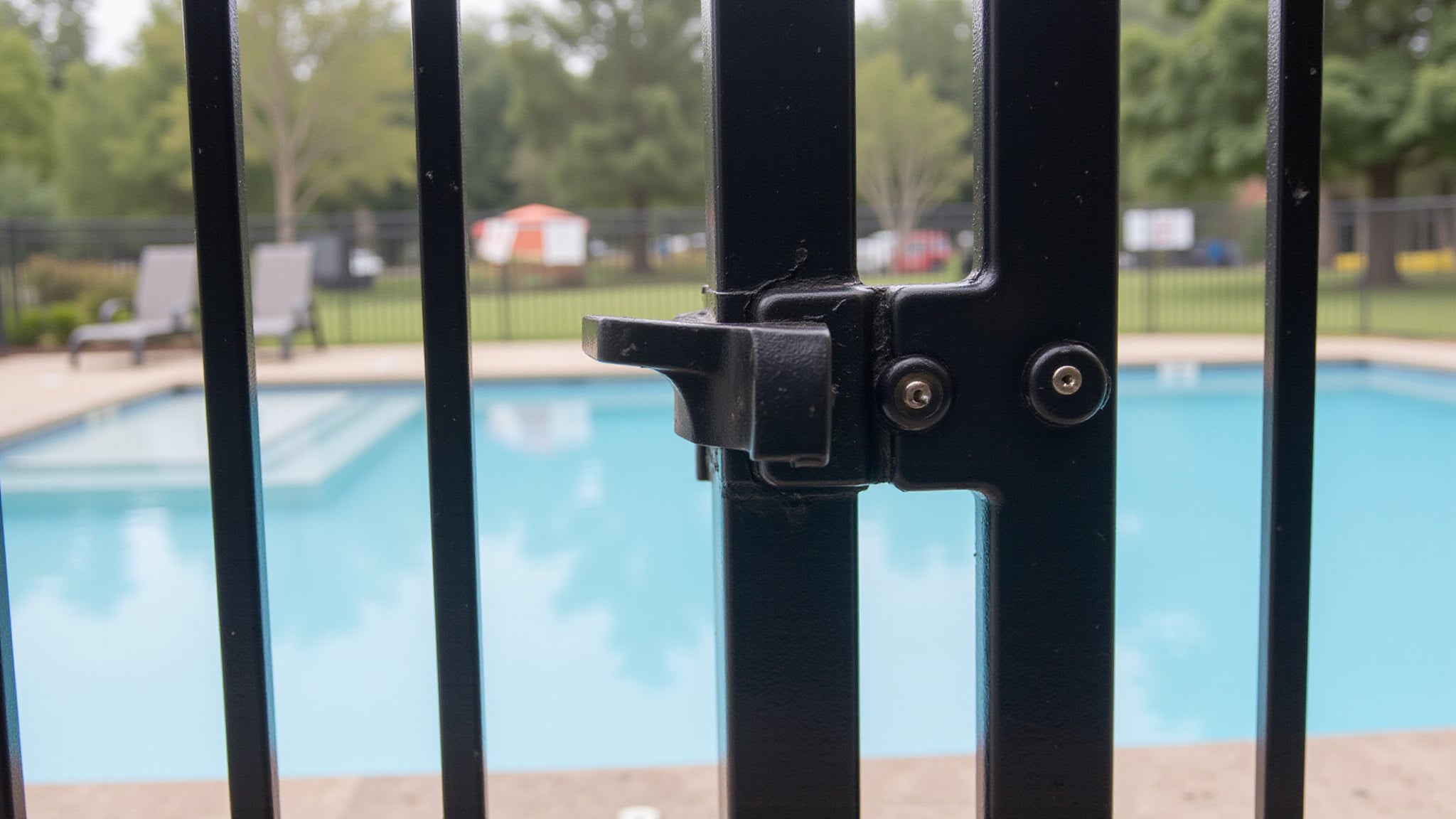
Gate and gap requirements factor in as part of the same safety system, because a code-compliant height means nothing if someone can slip under the fence or walk through an unlatched gate. Keep the bottom gap tight: CPSC guidance limits it to 4 inches on solid surfaces, 2 inches over grass or pebbles, and just 1 inch for removable mesh fences. Openings can’t let a 4-inch sphere pass through. Your gates have to be self-closing and self-latching, and they should swing outward away from the pool. If the latch sits on the pool side, mount it at least 54 inches above grade so kids can’t reach it. Get any one of these wrong, and your barrier fails inspection despite meeting the 48-inch height.
How do local codes vary on the requirement
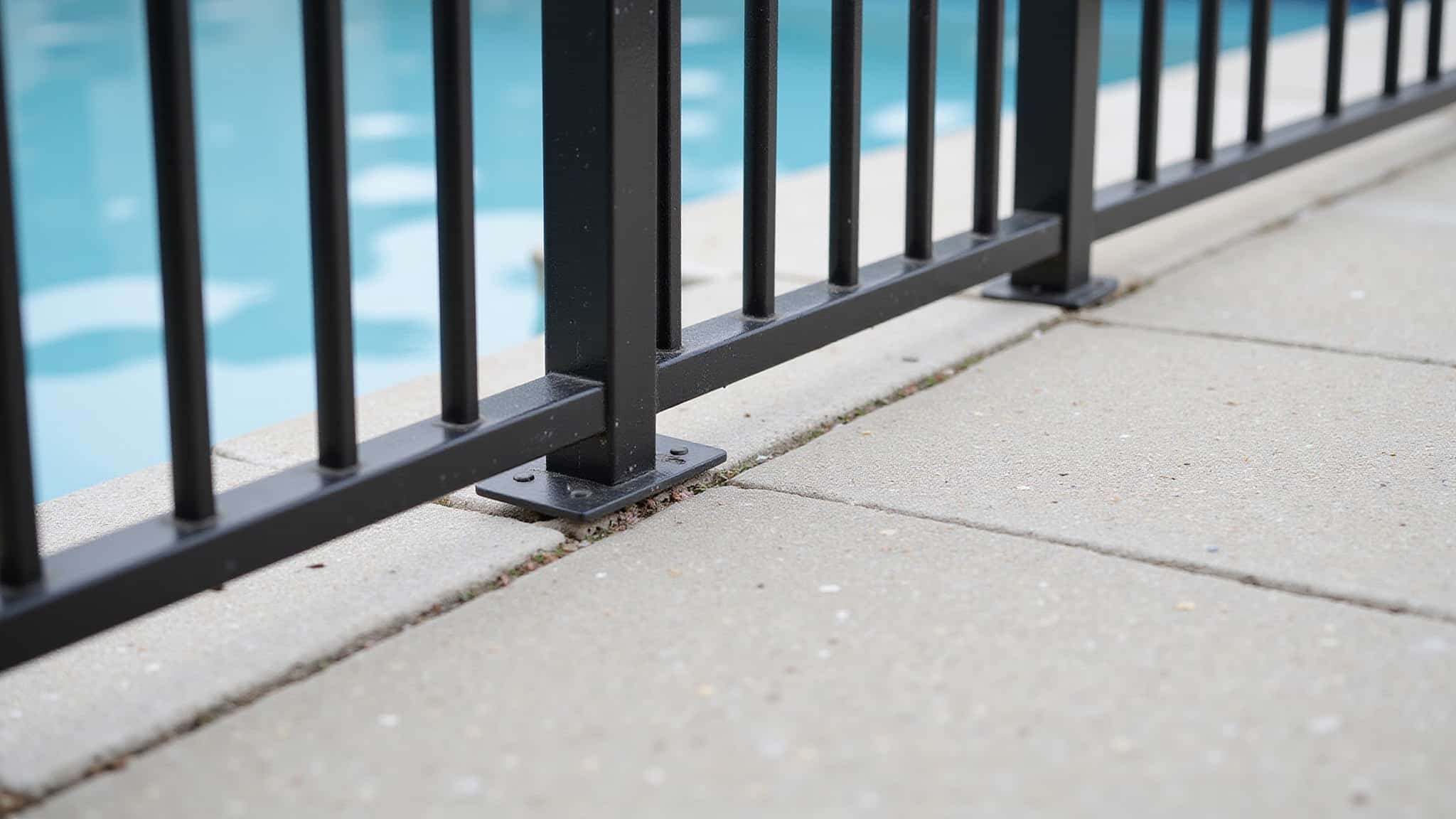
Local codes vary by jurisdiction and pool class, often pushing the minimum well past the 48-inch baseline, so never assume the model-code number is your number. The ISPSC and CPSC set 48 inches as the floor, but jurisdictions routinely raise it for specific pool classes.
| Jurisdiction/Class | Minimum Height | Notes |
|---|---|---|
| Model code (ISPSC/CPSC) | 48 inches | 60 inches preferred |
| Maryland semipublic pools | 60 inches | Self-closing gate required |
| Maryland certain barriers | 72 inches | Applies to some spas |
| Wahoo, NE outdoor pools | 48 to 72 inches | 6-foot maximum |
Always check your adopted local code, since it governs over any model reference. When an ordinance sets a stricter number, you must build to that height. Verify the requirement before you design, permit, or install anything.
How do you make sure yours meets code
To make sure yours meets code, treat your barrier as a complete safety system and verify every component against your adopted local code. Meeting code takes more than clearing the 48-inch line. Start by confirming your required height; some jurisdictions demand 60 or even 72 inches, so don’t assume 48 inches applies. Measure from grade on the exterior side around the full perimeter. Check bottom clearance, 4 inches on solid surfaces, 2 inches over grass or pebbles, 1 inch for removable mesh. Confirm no opening lets a 4-inch sphere pass. Verify your gate self-closes, self-latches, and swings outward, with the latch placed 54 inches above grade if it’s pool-side. Finally, eliminate climbable objects and horizontal members near the barrier. When in doubt, contact your local inspector before installation.
Conclusion: Meeting Pool Barrier Height Requirements
Pool barriers exist to keep children and others safe, and most codes set a minimum fence height of around 48 inches, with rules on gaps, gate latches, and self-closing hardware. Exact requirements vary by location, so checking your local code is essential before building or updating a barrier. A compliant, well-maintained fence protects your family and keeps you on the right side of the law. Safety and code compliance go hand in hand at the pool. Rules for residential swimming pools should also include guidelines for regular inspections and maintenance. Ensuring proper upkeep helps to prevent accidents and promotes a safe swimming environment for everyone.
Plan Your Perfect Inground Pool Today
Understanding backyard requirements, pool depth, and safety codes helps you plan smarter from day one. At Pool Doctor of the Palm Beaches in Lake Worth Beach, FL, our experienced team provides trusted New Pool Construction with full-service planning and code-compliant designs. Call +1 (561) 586-2815 today and get your free consultation.
Frequently Asked Questions
Can I Use My House Wall as a Pool Barrier?
Sometimes a house wall can serve as one side of the barrier, but codes usually add requirements, such as alarms on doors leading to the pool, to make up for the direct access. Rules vary by location. Check with your building department, since using the house as a barrier often comes with extra safety conditions.
Do Above-Ground Pools Need a Separate Fence?
It depends on the pool and local code. Some above ground pools count as a barrier because of their height, provided the ladder is removable or lockable, while others still require a fence. Requirements differ by area. Confirm with your local code whether your above ground pool needs additional fencing.
Are Glass or Acrylic Pool Barriers Allowed Under Code?
Often, yes, if they meet the code’s height, strength, and spacing requirements. Glass and acrylic panels are popular for keeping views open while staying compliant, but they must be rated for the job. Check that any glass barrier meets your local standards for pool safety before installing it.
How Often Should I Inspect My Pool Barrier?
Checking your barrier regularly, at least a few times a year and before heavy-use season, keeps it safe and compliant. Look at the gate latch, hinges, height, and any gaps, and make sure self-closing hardware works. Catching a loose gate or damaged section early keeps the barrier doing its job.
Does Landscaping Near the Fence Affect Barrier Compliance?
It can. Objects near a fence, including landscaping, furniture, or planters, that a child could climb to get over the barrier may violate code. Keeping the area around the fence clear of climbable items is part of staying compliant. Plan landscaping so it does not create a foothold near the barrier.