


You can fix a pool pipe leak under concrete without digging by isolating the suspected line, plugging one end, and attaching a pressure rig with a gauge. Run a pressure test at 8 to 12 psi; a drop of 5 psi or less over 30 seconds signals a small leak. Circulate a two-part liquid sealant to seal it internally, or reroute the line entirely. The right method depends on diagnostics you’ll want to understand first. To ensure a seamless transition, it’s essential to fill the gap between pool and deck during repairs. This will help prevent water from pooling in the area and causing further damage.
Key Takeaways
- Confirm the leak by isolating the line, plugging one end, and running a pressure test at 8 to 12 psi.
- A pressure drop of 5 psi or less over 30 seconds indicates a small leak suitable for liquid sealant repair.
- Seal internally by circulating two-part sealant (Part A, then Part B), curing 2 to 3 hours before retesting.
- Reroute the failed line through existing plumbing using string-and-plug and slit-and-clamp connections when sealant won’t work.
- Call a leak detection pro when pressure testing cannot isolate or narrow the failure zone.
How do you fix a pool pipe leak under concrete
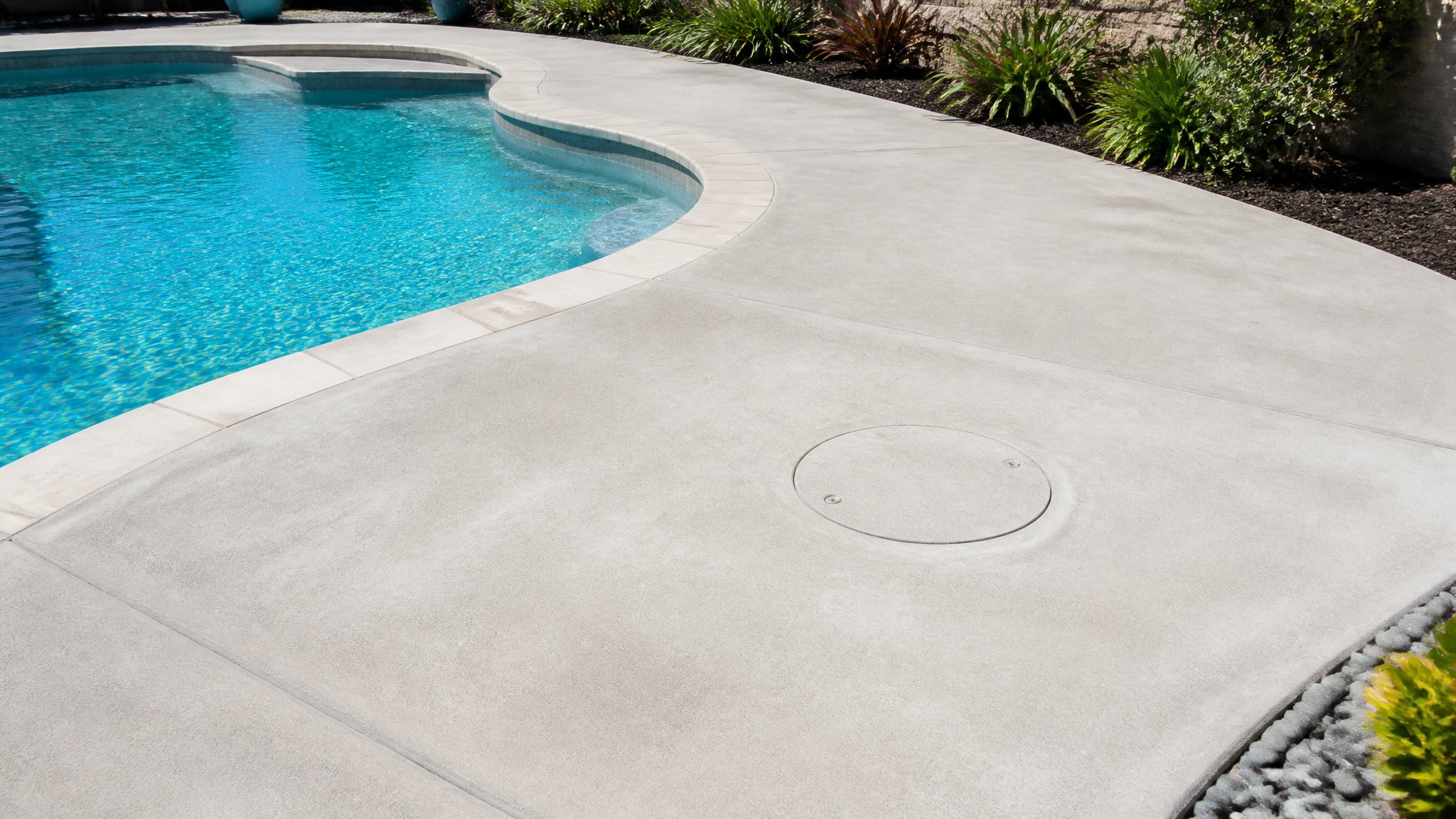
You fix a leaking pool pipe under concrete by pressure testing the line and sealing it from inside the PVC with a two-part liquid sealant, often without breaking the slab. Start with diagnostics: isolate the suspected line, plug one end, and attach a pressure rig with a gauge to the other. Run a pressure test at 8 to 12 psi and watch for drop. If you lose roughly 5 psi or less over 30 seconds, a two-part liquid sealant repair may seal the slab leak from inside the PVC pipe. Circulate Part A with water flow through a temporary loop, then introduce Part B to react and harden at the failure site. Allow 2 to 3 hours of circulation before re-testing. If both ends stay accessible for isolation, you’ll often repair the line without cutting or demolishing any concrete.
How do you confirm the leak is under the slab
Confirm the leak is under the slab with a pressure test: plug one end, attach a pressure rig with a gauge to the other, and apply a low test pressure of about 8 to 12 psi. Watch for pressure drop. A loss of roughly 5 psi or less over 30 seconds suggests a small leak that liquid sealant may address. If you’re already suspecting an area, run a dye test to confirm the approximate location. For precise pinpointing before any excavation, use ultrasonic leak detection to narrow the failure zone. This diagnostic sequence isolates the leaking line, verifies it’s slab-buried, and prevents unnecessary concrete removal. Can you put an above ground pool on concrete? This is a common question among homeowners looking to maximize their backyard space.
How does epoxy pipe lining seal it
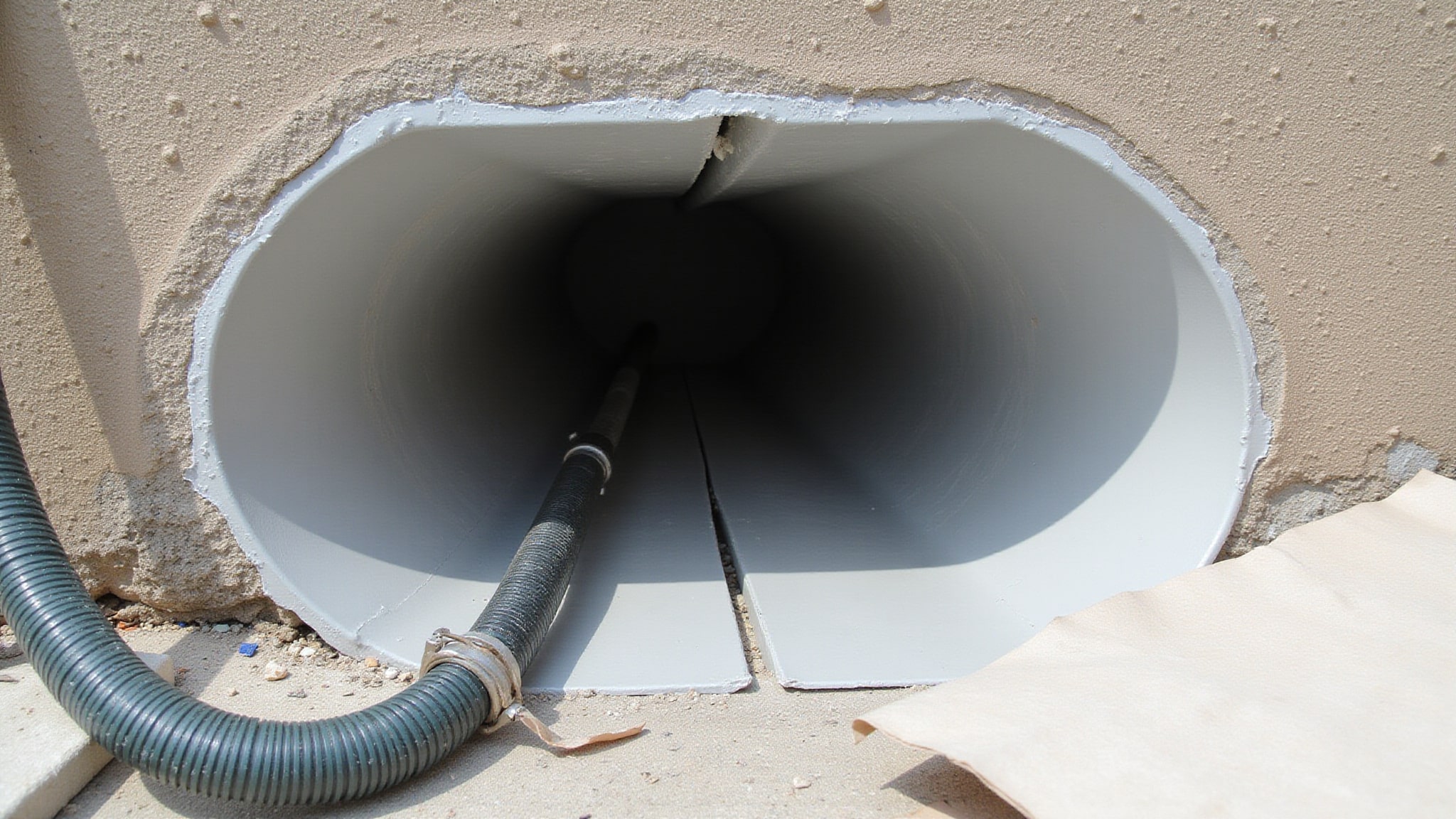
Epoxy pipe lining seals a leak by circulating a two-part liquid repair system that hardens inside the pipe at the leak site, forming a permanent internal seal without demolition. You circulate Part A first, driving water flow through a temporary rig or loop connected at both isolated line ends. With the pump running continuously, you introduce Part B, which reacts with Part A and hardens at the leak site, forming a permanent internal seal.
This method relies on accessible return or drain lines near your equipment pad for isolation and circulation. You’ll typically run the repair cycle for 2 to 3 hours before retesting. After curing, you pressurize the line again, watching for a drop of 5 psi or less over 30 seconds, to verify the seal holds under operating conditions.
How does rerouting avoid breaking the concrete
Rerouting avoids breaking the concrete because you bypass the failed pipe section entirely instead of exposing and replacing it under the slab. You isolate the compromised line at accessible points near the equipment pad, then establish a new flow path through existing plumbing. A string-and-plug method pulls a replacement conduit, backwash hose or flexible hose material, through the original pipe path. You connect it to existing pipe ends using slit-and-clamp connections, maintaining hydraulic continuity without demolition. This approach depends on both line ends being accessible for isolation and pressure testing. You verify the reroute holds pressure at 8 to 12 psi before returning the system to service. When return or drain lines terminate near the pad, you preserve slab integrity and eliminate concrete cutting, patching, and rework entirely.
How do the no dig methods compare on cost

Liquid sealant repair costs less than rerouting because it minimizes labor complexity and material scope. It requires only a two-part system, a temporary circulation loop, and 2 to 3 hours of pump time before you re-run pressure testing. Rerouting adds conduit material, backwash or flexible hose, plus slit-and-clamp connections and string-and-plug labor to pull the substitute line through the existing path.
| No-Dig Method | Primary Cost Driver |
|---|---|
| Liquid sealant | Two-part reactant and circulation time |
| Rerouting | Hose conduit and connection labor |
You’ll weigh leak size and pipe condition against each approach. Small leaks holding within the 5-psi-over-30-seconds range favor sealant. Severe breakage or collapse pushes you toward rerouting or, ultimately, code-compliant excavation and replacement. When considering the overall aesthetic and functionality of your backyard, it’s essential to build an above ground pool deck that complements your landscape.
When should you call a leak detection pro
Call a leak detection pro when you can’t isolate the failure with basic pressure testing alone. If your line won’t hold 8 to 12 psi and you can’t narrow the loss beyond the 5-psi-over-30-seconds threshold, you need diagnostic equipment you likely don’t have. Pros run ultrasonic leak detection to pinpoint underground failures before anyone opens a slab, reducing unnecessary concrete removal. They’ll also confirm the location with dye testing when the suspected area’s already identified. Call one if both line ends aren’t accessible for isolation, if the pipe won’t hold pressure at all, or if you suspect collapse. Accurate localization determines whether a no-dig repair’s viable or full excavation’s unavoidable.
Conclusion: Fixing Pool Pipe Leaks Without Digging
No-dig pipe repair is a practical way to fix a leaking pool line under concrete without tearing up the deck. Methods like epoxy lining and pipe relining seal leaks from the inside, saving the time, mess, and cost of excavation. They work best for the right kind of leak, so a professional leak detection confirms whether a no-dig fix is a good fit. When it is, it restores the plumbing while leaving your deck intact.
Call Today and Upgrade Your Pool Deck
From filling gaps to resurfacing older decks, quality pool deck work brings safety and beauty together. At Pool Doctor of the Palm Beaches in Riviera Beach, FL, our skilled team delivers dependable Pool Deck and Coping Materials built for Florida’s climate and your style. Call +1 (561) 586-2815 today and start your project.
Frequently Asked Questions
How Long Does a No-Dig Pool Pipe Repair Typically Last?
A quality no-dig repair, such as epoxy lining, can last many years, often comparable to a traditional repair when done correctly on a suitable pipe. Its longevity depends on the pipe’s condition and the extent of the damage. A professional assessment helps ensure the method is a good match, which is what makes the repair last.
Can I Perform a No-Dig Pipe Repair Myself?
No-dig repairs rely on specialized equipment and materials for leak detection, cleaning, and lining the pipe from the inside, so they are best left to professionals. A DIY attempt without the right tools can miss the leak or fail to seal properly. A pro locates the leak precisely and applies the repair correctly the first time.
Will My Pool Warranty Cover No-Dig Pipe Repairs?
It depends on the warranty and the cause of the leak. Some warranties cover plumbing defects, while age, wear, or ground movement may not be covered. Check your warranty terms and keep documentation. A professional repair with a record of the work also helps if you need to make a claim.
What Causes Pool Pipes Under Concrete to Leak?
Common causes include ground shifting, tree roots, age and corrosion, poor original installation, and freeze-thaw stress in some climates. Chemical imbalance can also wear pipes over time. Because the cause affects the best repair, professional leak detection pinpoints both the location and the reason before fixing it.
Can No-Dig Methods Repair Large-Diameter Drain Lines?
No-dig methods work on a range of pipe sizes, but very large-diameter or severely collapsed lines may need a different approach. A professional evaluates the pipe’s size, material, and condition to confirm whether relining or lining will work. If a no-dig fix is not suitable, they can recommend the best alternative.